
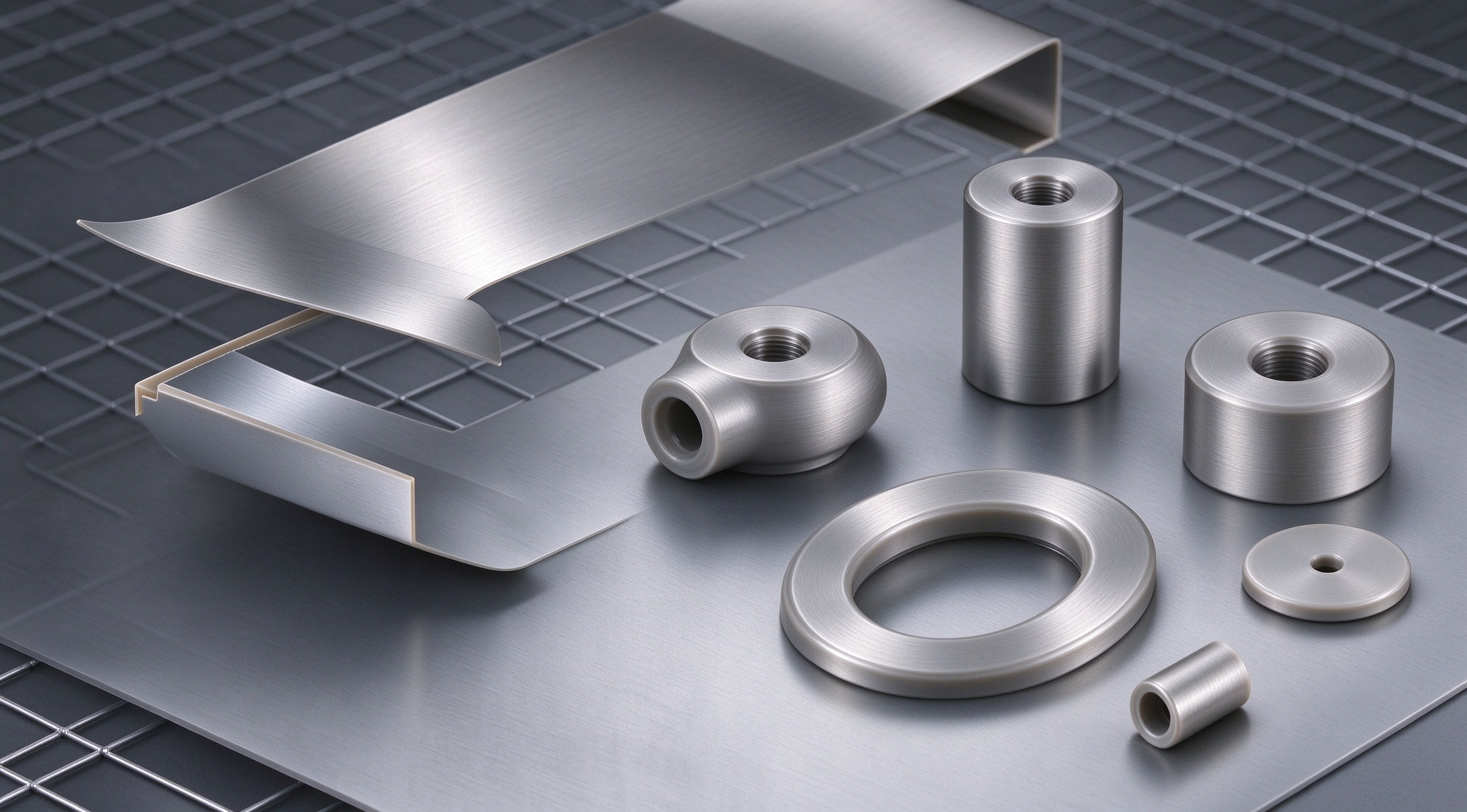
Brushed Nickel Finish for Plastic
Create a premium satin-metal appearance on plastic parts with controlled brushing texture and stable tone—ideal for lightweight components that need a consistent brushed look across production batches and high-visibility surfaces.
INTRODUCTION
About Brushed Nickel Finishing
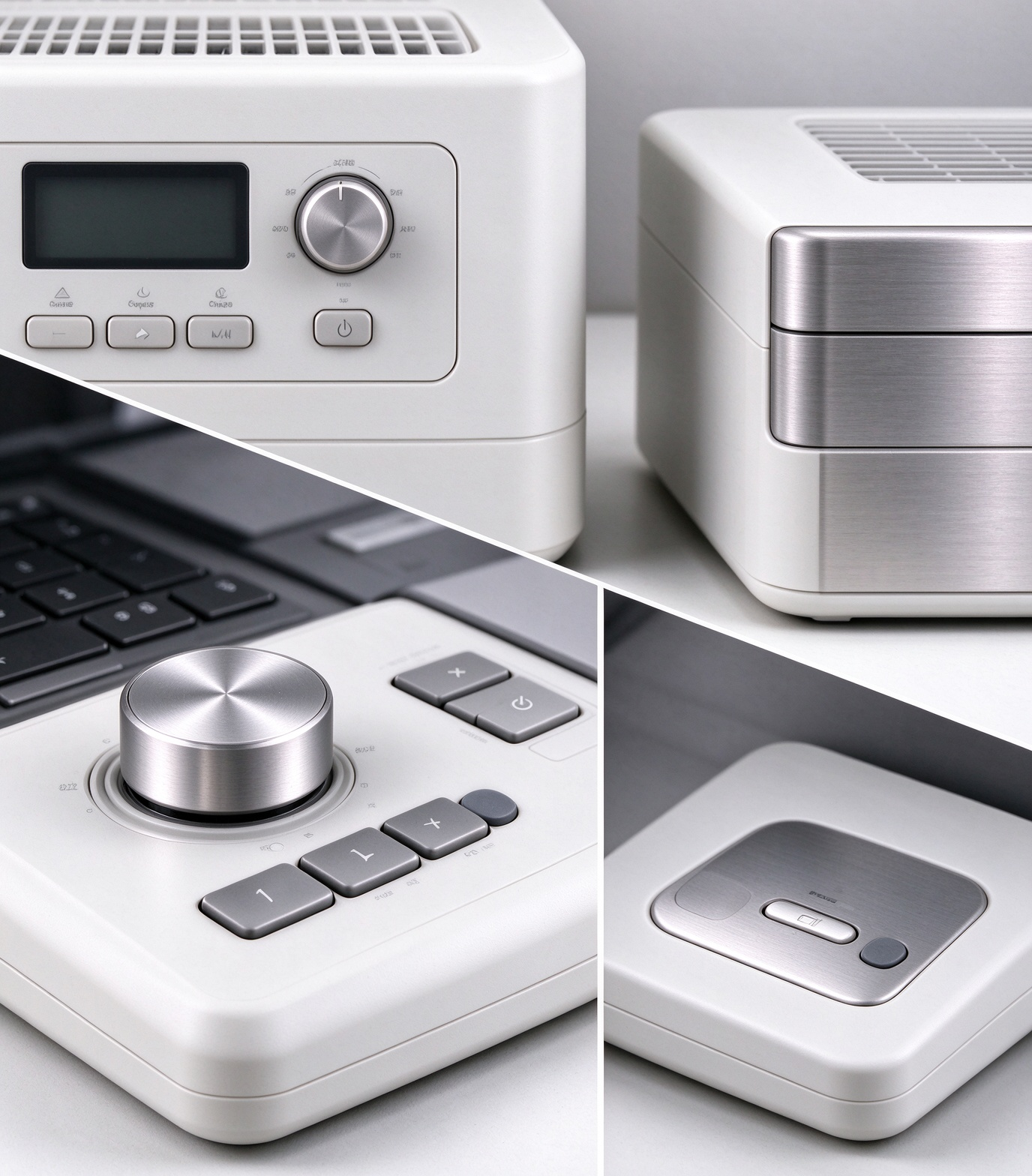
Brushed nickel is a popular finishing choice for products that need a modern, satin-metal look without the high glare of bright chrome. For plastic components, it helps elevate perceived value while keeping parts lightweight, design-flexible, and cost-efficient—making it a strong fit for consumer goods, decorative trims, and hardware.
Beyond appearance, brushed nickel is valued for its more forgiving surface character: the satin texture helps reduce the visibility of fingerprints, minor scuffs, and everyday handling marks compared with mirror finishes. With the right plating build, surface preparation, and optional protective topcoat, brushed nickel finishes can also support consistent color tone, uniform texture direction, and production-ready repeatability across approved batches.
Product Description
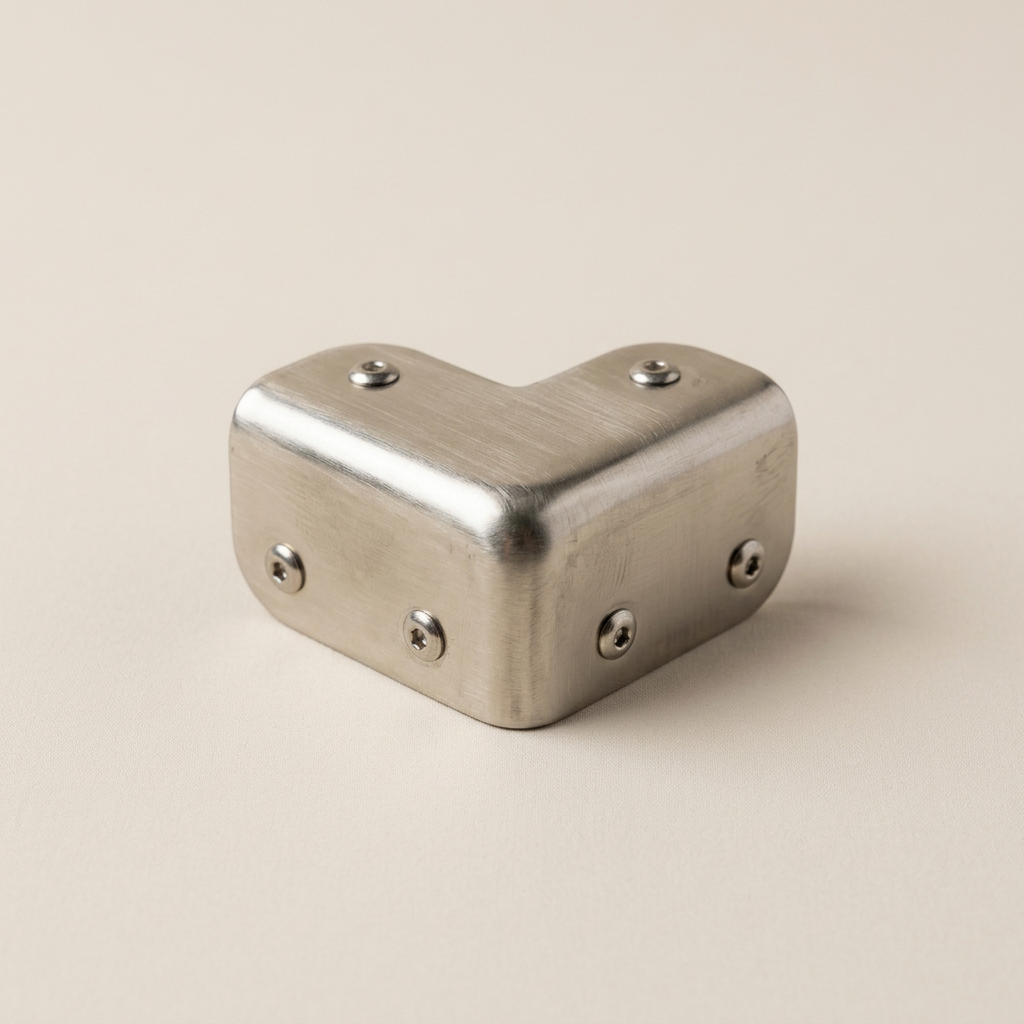
The Luggage Corner Protector -Brushed Nickel-013 is a precision-electroplated ABS corner guard component designed to reinforce and decorate the corners of hard-shell and soft-shell luggage, travel cases, instrument cases, and premium storage trunks. Its L-shaped wrap-around form covers three faces of a case corner simultaneously — top face, front face, and side face — with a deep, rounded outer corner profile that absorbs impact and distributes corner drop loads across the case structure. Six countersunk Torx screw fixing positions — three per arm — secure the protector directly through the case shell for a permanent, rattle-free attachment that withstands repeated drop impacts, airline baggage handling, and heavy stacking loads. The consistent brushed nickel electroplated finish across all three visible faces and the outer corner radius delivers a premium, hardware-grade metallic appearance that coordinates naturally with brushed nickel zip pullers, locks, and carry handles on high-end luggage collections. Fully customizable in overall size, corner radius, screw count and position, and surface finish for OEM luggage brand, travel accessory, and case hardware supply projects.
Size
Arm Length (each): approx. 48 mm (customizable)
PRODUCT SHOWCASE
Brushed Product Examples
Explore common product types produced with a brushed nickel appearance for consumer and industrial applications.
Product Description
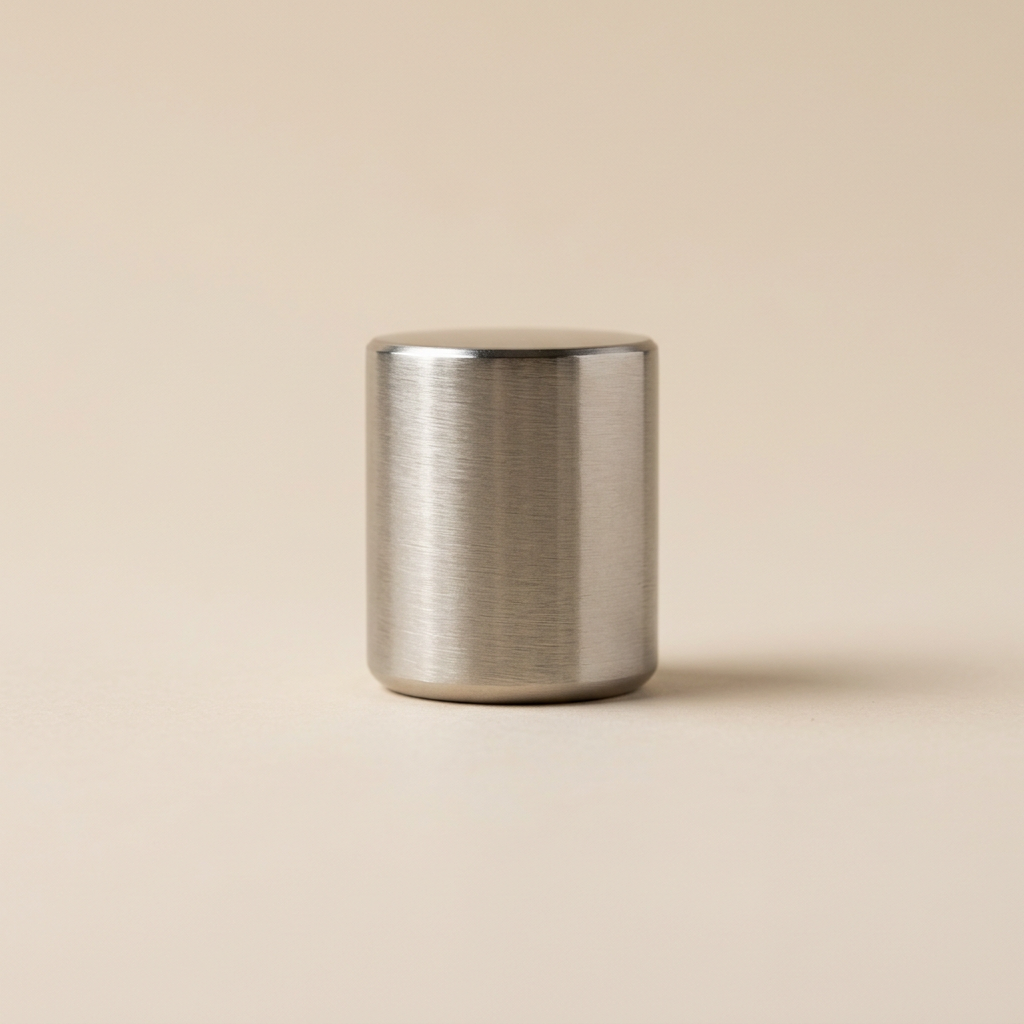
The Perfume Bottle Cap - Brushed Nickel-012 is a precision-electroplated fragrance packaging component featuring a clean, minimalist solid cylinder form with a lightly domed top face and a subtle base step. Its unembellished, smooth cylindrical exterior presents a deliberately restrained aesthetic — allowing the brushed nickel surface itself to serve as the sole design statement, projecting quiet luxury and material confidence without ornamentation. The consistent directional brushed satin finish running vertically along the full cap height delivers a refined linear grain that shifts subtly in reflectivity as light angle changes, giving the cap a living, dynamic metallic quality on the fragrance shelf. The slightly domed top face adds a gentle three-dimensional crown that elevates the cap silhouette above a purely utilitarian cylinder. Fully customizable in diameter, height, internal bore, fit mechanism, and surface finish for OEM fragrance brand, niche perfumery, and luxury personal care packaging supply projects.
Size
Outer Diameter: ɸ approx. 20 mm (customizable)
Product Description
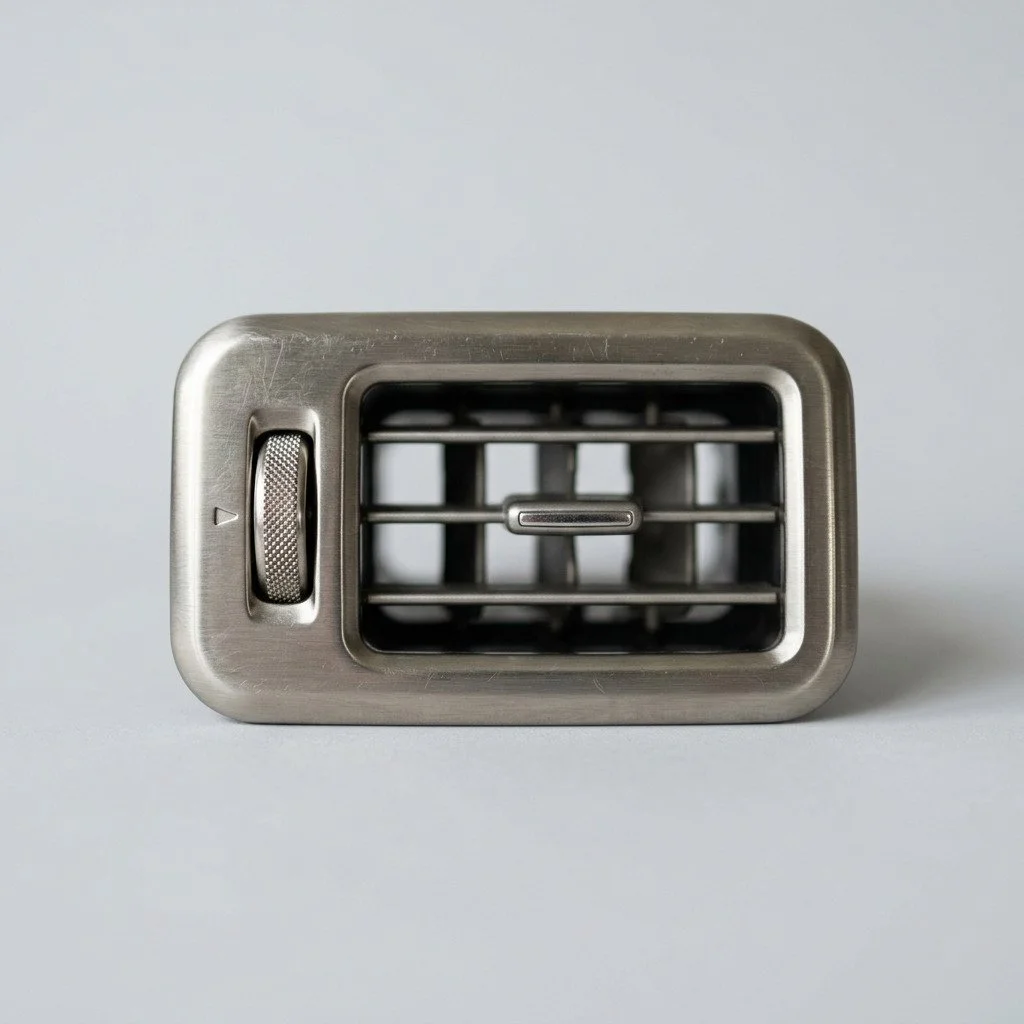
The Dashboard Air Vent Trim- Brushed Nickel -010 is a precision-electroplated automotive interior air vent bezel and surround assembly designed to frame and finish the HVAC air outlet on a vehicle dashboard or centre console. The rectangular outer bezel features deep radiused corners and a wide sculptured frame face, housing an inner vent louvre assembly with horizontal adjustable fins and a central airflow direction control bar. A left-side integrated airflow volume control dial — featuring a diamond-pattern knurl face and directional indicator arrow — provides tactile, in-position airflow adjustment without requiring a separate control component. Full-body brushed nickel electroplating across the outer bezel, inner louvre fins, and control dial delivers a unified warm satin metallic finish that elevates the surrounding interior trim quality. Fully customizable in overall bezel size, louvre count, dial position, and surface finish for OEM automotive interior trim and aftermarket upgrade supply projects.
Size
Overall Size: approx. 70 × 30 mm (customizable per vehicle model)
Product Description
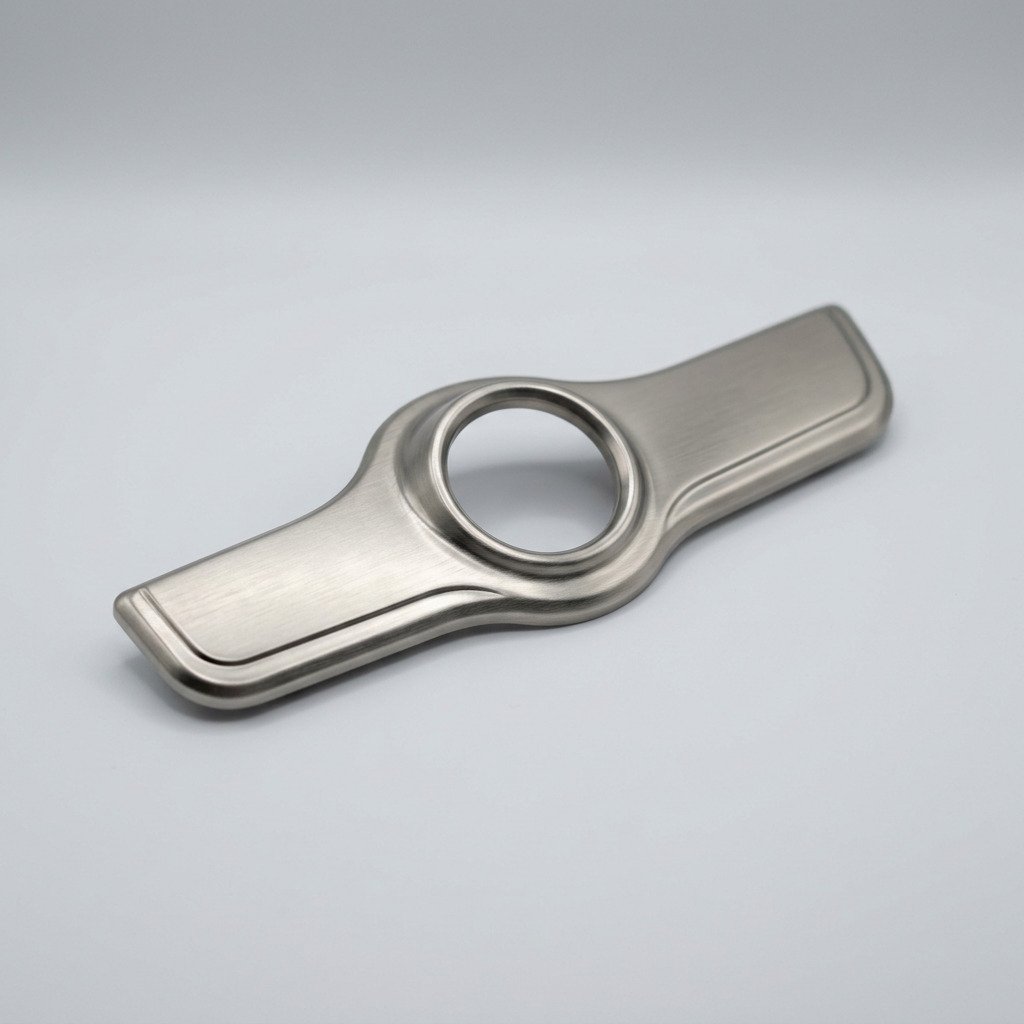
The Instrument Cluster Surround Trim-Brushed Nickel-011 is a precision-electroplated automotive interior accent component designed to frame the instrument gauge or dial housing on a vehicle dashboard. Its distinctive bow-tie silhouette — twin flat paddle arms extending symmetrically from a raised central circular ring aperture — follows the organic, sculptured design language of premium automotive interior architecture. The central ring frames a single instrument gauge bezel or dial cutout, while the twin arms sweep outward with gently contoured edges and a subtle raised perimeter bead detail that adds three-dimensional depth to the component face. The smooth, flowing transition between the circular centre ring and the outward-tapering arms is produced as a single seamless surface with no visible joints or weld lines. Full-body brushed nickel electroplating delivers a consistent warm satin metallic finish across the entire sculpted surface. Fully customizable in overall span, ring diameter, arm profile geometry, and surface finish for OEM automotive interior trim and aftermarket dashboard upgrade supply projects.
Product Dimensions
Overall Span (tip to tip): approx. 80 mm (customizable)
Product Description
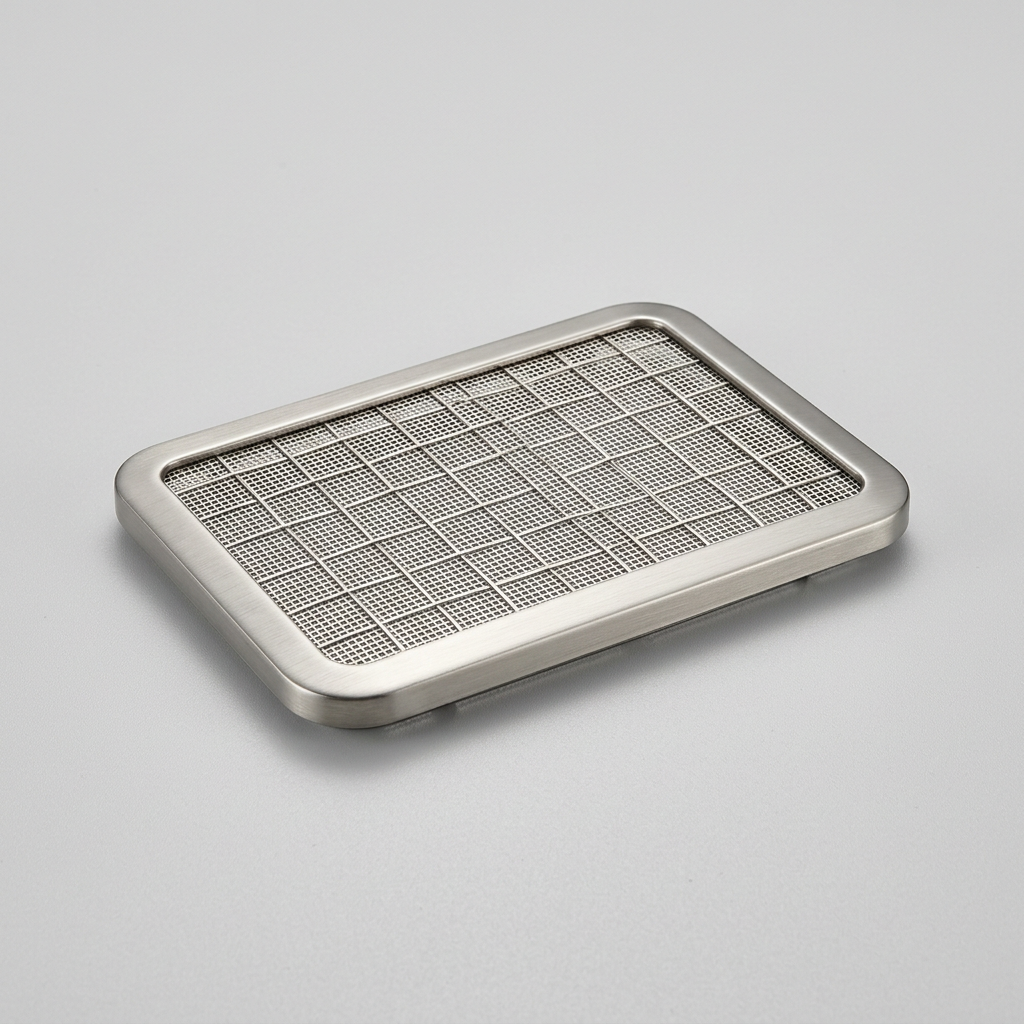
The Square Mesh Tray - Brushed Nickel-009 is a precision-electroplated decorative tray and organiser featuring a wide flat ABS outer frame with deeply radiused corners and a full-face square grid mesh inner panel. The sculptured frame profile — domed upper surface transitioning smoothly into a flat base with integrated rubber foot pads — gives the tray a substantial, premium presence on any surface. The fine square grid mesh panel set flush within the frame delivers both visual texture and practical drainage or ventilation function, making it equally suited to bathroom vanity organisation, desktop accessory display, kitchen countertop use, and hospitality amenity presentation. Full-body brushed nickel electroplating across both the outer frame and the mesh panel face delivers a unified warm satin metallic finish throughout. Fully customizable in overall size, mesh pattern, frame profile, and finish for OEM home goods, hospitality supply, and retail lifestyle accessory projects.
Size
Overall Size: approx. 180 x 140 mm (customizable)
Product Description
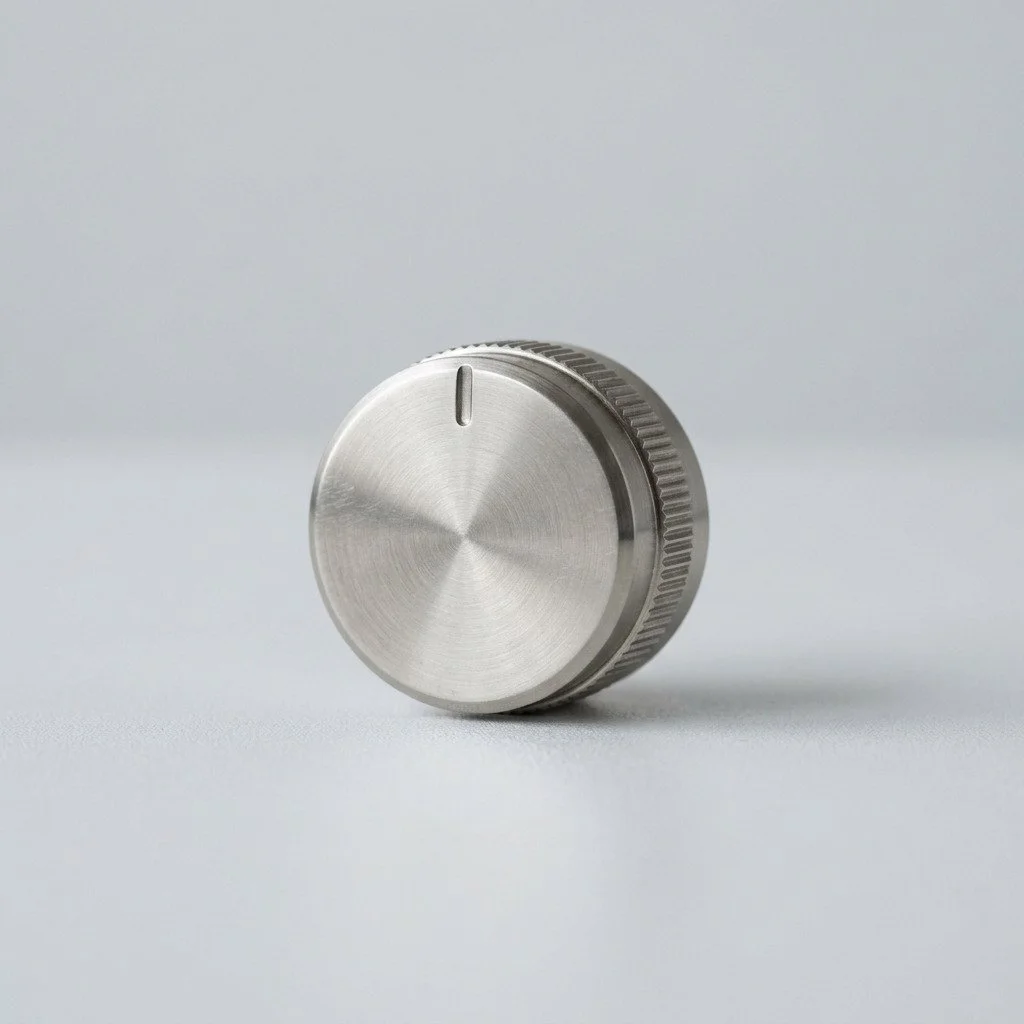
The Rotary Control Knob - Brushed Nickel-008 is a precision-electroplated ABS control knob designed for audio equipment, electronic instruments, home appliances, and automotive interior control panels. Its compact cylindrical form features two distinct surface treatments applied to a single component: a concentric spiral-brushed flat top face with a central position indicator slot, and a vertically knurled side wall providing secure, non-slip grip during rotation. The concentric brush pattern radiates outward from the centre of the top face, creating a premium, jewellery-like focal point that elevates the perceived quality of any control panel it is fitted to. The vertical knurl on the side wall delivers positive tactile feedback and confident grip throughout the full rotation arc. Full-body brushed nickel electroplating covers both the concentric-brushed top face and the knurled side wall for a unified, warm satin metallic finish. Fully customizable in diameter, height, shaft bore, knurl pattern, and surface finish for OEM audio hardware, consumer electronics, home appliance, and automotive interior control supply projects.
Size
Outer Diameter: ɸ approx. 38 mm (customizable)
Product Description
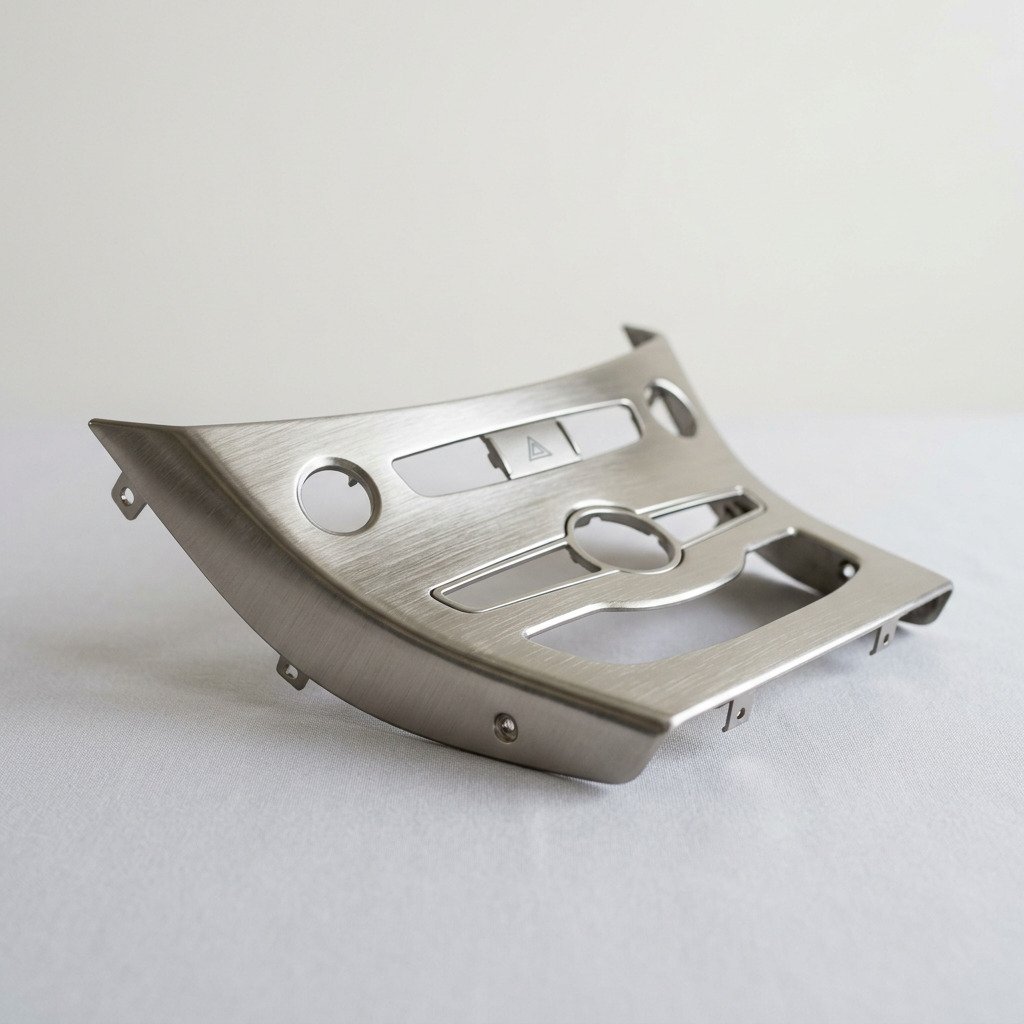
The Centre Console Trim Panel - Brushed Nickel-007 is a precision-formed and surface-finished automotive interior trim component designed to frame the centre console control cluster of a passenger vehicle. Its compound-curved face panel follows the ergonomic contour of the dashboard and centre stack geometry — concave laterally and gently convex longitudinally — integrating seamlessly with the surrounding interior architecture rather than sitting as a flat appliqué on the console surface. The panel accommodates a full complement of control apertures including a hazard warning switch slot, rotary knob or dial aperture, gear selector surround cutout, and additional button or switch positions, all precision-punched and CNC-finished to tight dimensional tolerances for accurate OEM control component fit. Perimeter mounting tabs and locating clips are formed directly into the panel edges for tool-free snap-fit installation onto the console sub-structure. The consistent brushed nickel electroplated finish across the full compound-curved face delivers a premium, restrained metallic aesthetic that complements both contemporary and classic vehicle interior design languages. Fully customizable in panel geometry, aperture layout, mounting tab configuration, and surface finish for OEM automotive interior trim and aftermarket upgrade supply projects.
Size
Overall Size: approx. 220 x 160 mm (customizable per vehicle model)
Product Description
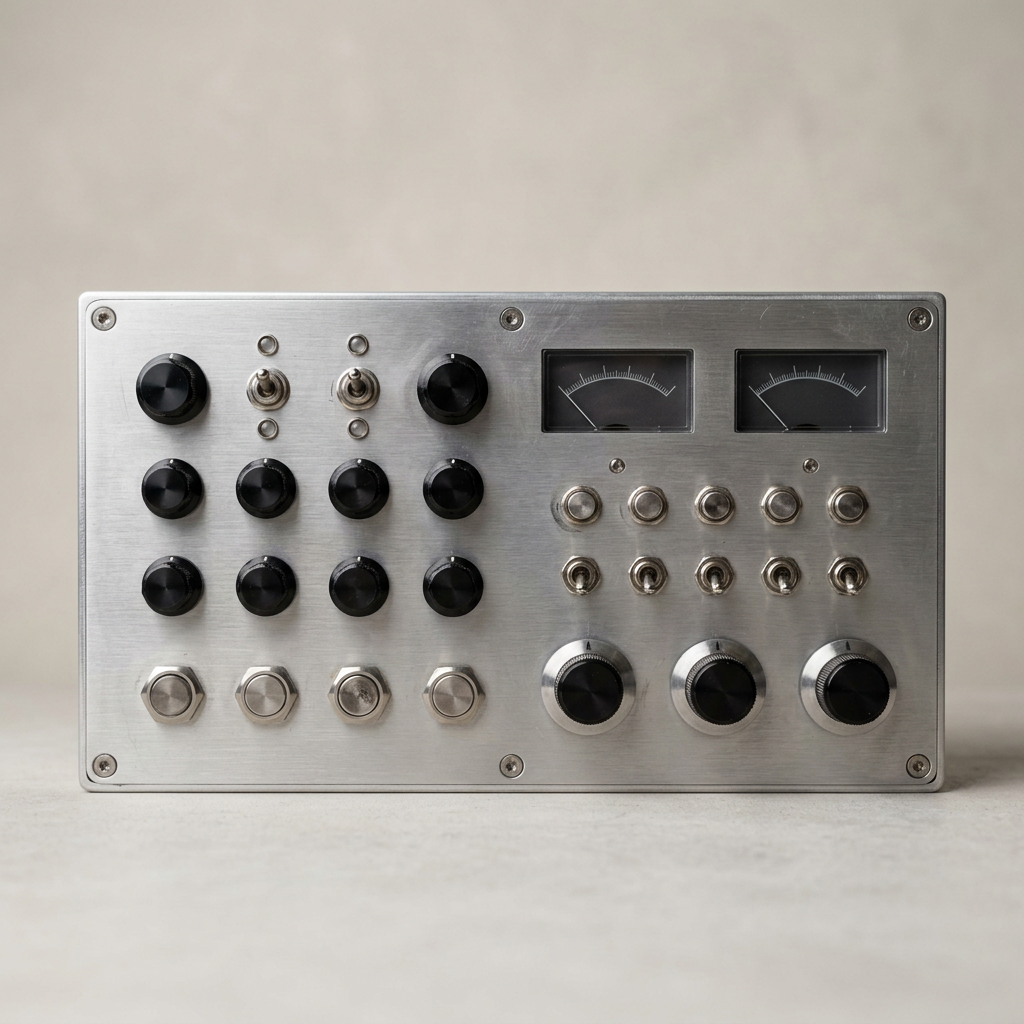
The Electronic Control Panel-Brushed Nickel-005 is a precision-machined and surface-finished front panel housing component designed for audio equipment, industrial controllers, laboratory instruments, and professional electronic device enclosures. Its wide rectangular brushed aluminium face features a full complement of machined apertures accommodating rotary knobs, toggle switches, push-button switches, analogue VU meters, and indicator LEDs — all arranged in a functional, high-density layout that balances operational clarity with a classic industrial instrument aesthetic. Corner-mounted countersunk screw fixings secure the panel to the host enclosure chassis. The consistent brushed satin aluminium finish across the full panel face delivers the authoritative, professional appearance associated with high-grade audio and instrumentation hardware. Fully customizable in overall dimensions, aperture layout, component cutout geometry, corner fixing pattern, and surface finish for OEM electronic equipment, audio hardware, and industrial instrument front panel supply projects.
Size
Overall Size: approx. 280 x 180 mm (customizable)
Product Description
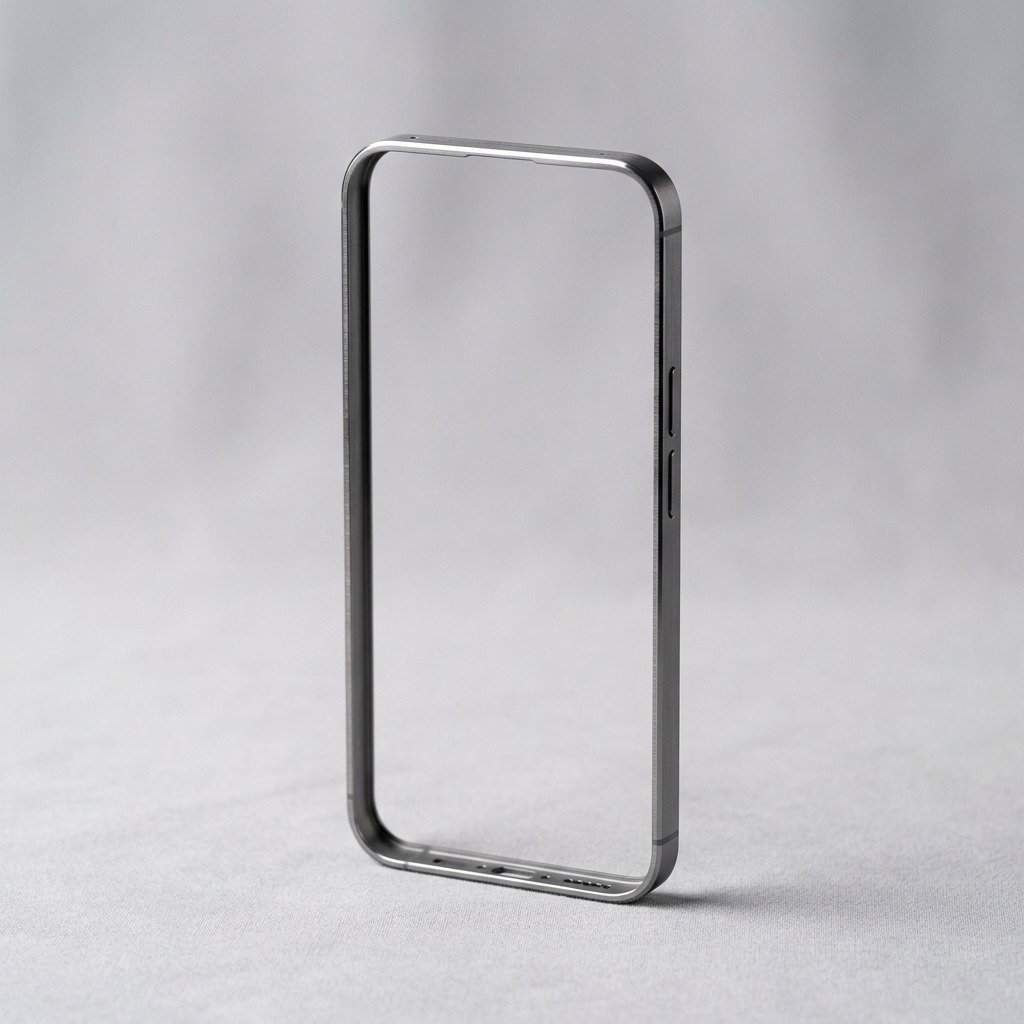
The Smartphone Bumper Frame-Brushed Nickel-004 is a precision CNC-machined metal bumper component forming the complete outer perimeter frame of a smartphone body. Its slim rectangular profile with generously radiused corners wraps the device in a continuous aluminium rail — housing all side button cutouts, speaker grille perforations, charging port aperture, and SIM tray slot within a single machined component. The space grey anodised finish delivers the restrained, premium aesthetic of flagship smartphone hardware, while the CNC-machined button cutouts and perforation arrays are executed with the tight tolerances required for tactile button travel, port access, and acoustic performance. Manufactured from high-strength aluminium alloy with a multi-stage brushed and anodised surface treatment, it meets the structural, dimensional, and surface quality standards required for smartphone OEM and aftermarket frame supply. Fully customizable in overall dimensions, button layout, port cutout geometry, corner radius, wall thickness, and surface finish for OEM smartphone brand and contract electronics manufacturing projects.
Size
Overall Size: approx. 147 x 72 mm (customizable to specific smartphone model)
Product Description
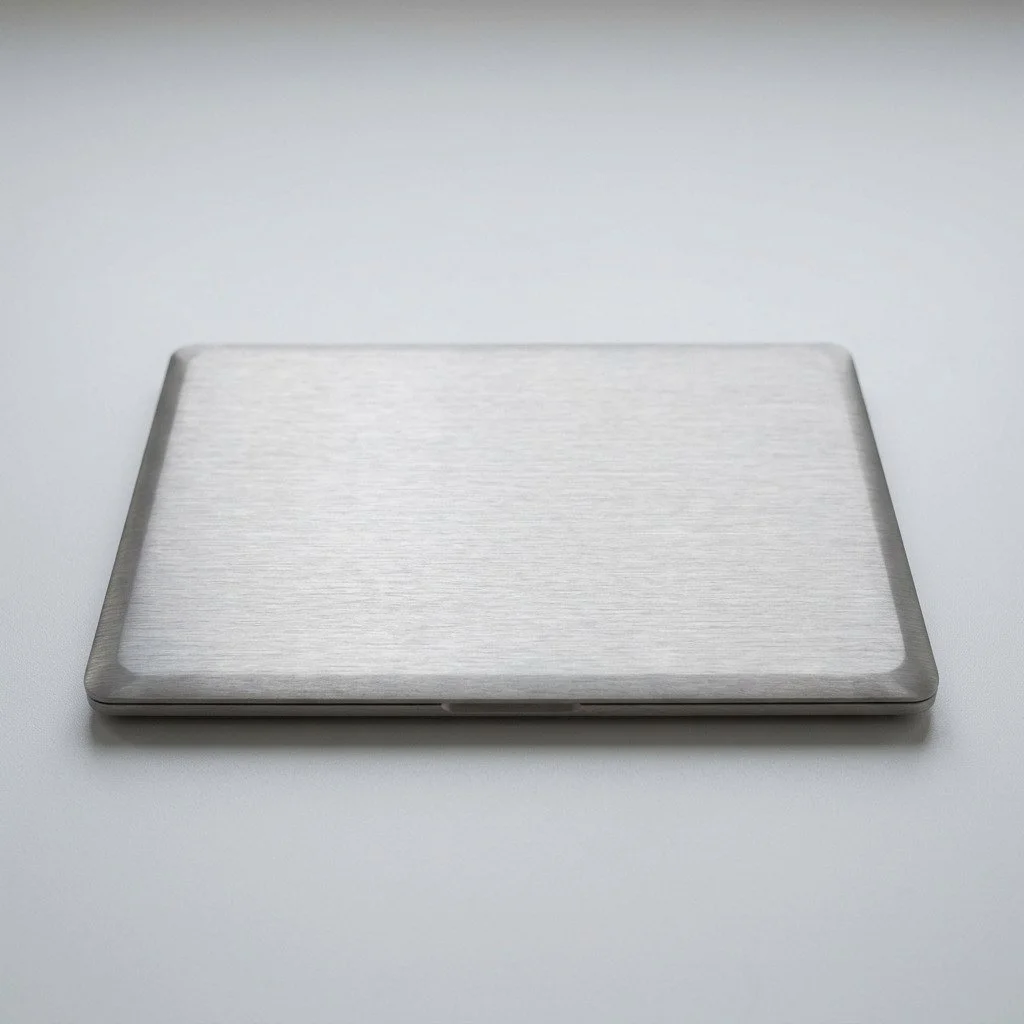
The Laptop Lid Cover Shell-Brushed Aluminium-003 is a precision-formed and surface-finished notebook computer top lid housing component featuring a wide flat panel face, uniformly deep radiused corners on all four edges, and a thin, consistent wall profile throughout. The full-face directional brushed aluminium finish delivers the clean, premium aesthetic associated with high-end ultrabook and professional notebook product lines, while the tight-tolerance lid-to-base parting line at the front edge ensures a flush, gap-free closed appearance. Manufactured from aerospace-grade aluminium alloy with CNC-machined or die-cast forming and a multi-stage anodised brushed surface treatment, it is engineered for the structural rigidity, thermal performance, and surface durability required of a notebook outer housing component. Fully customizable in overall dimensions, wall thickness, hinge mount geometry, port cutout layout, and surface finish for OEM notebook brand and consumer electronics contract manufacturing supply projects.
Size
Overall Size: approx. 320 x 220 mm (customizable to specific notebook model)
Our Brushed Nickel Process
We offer multiple process routes to achieve a brushed nickel appearance based on substrate, durability needs, and target color.
1
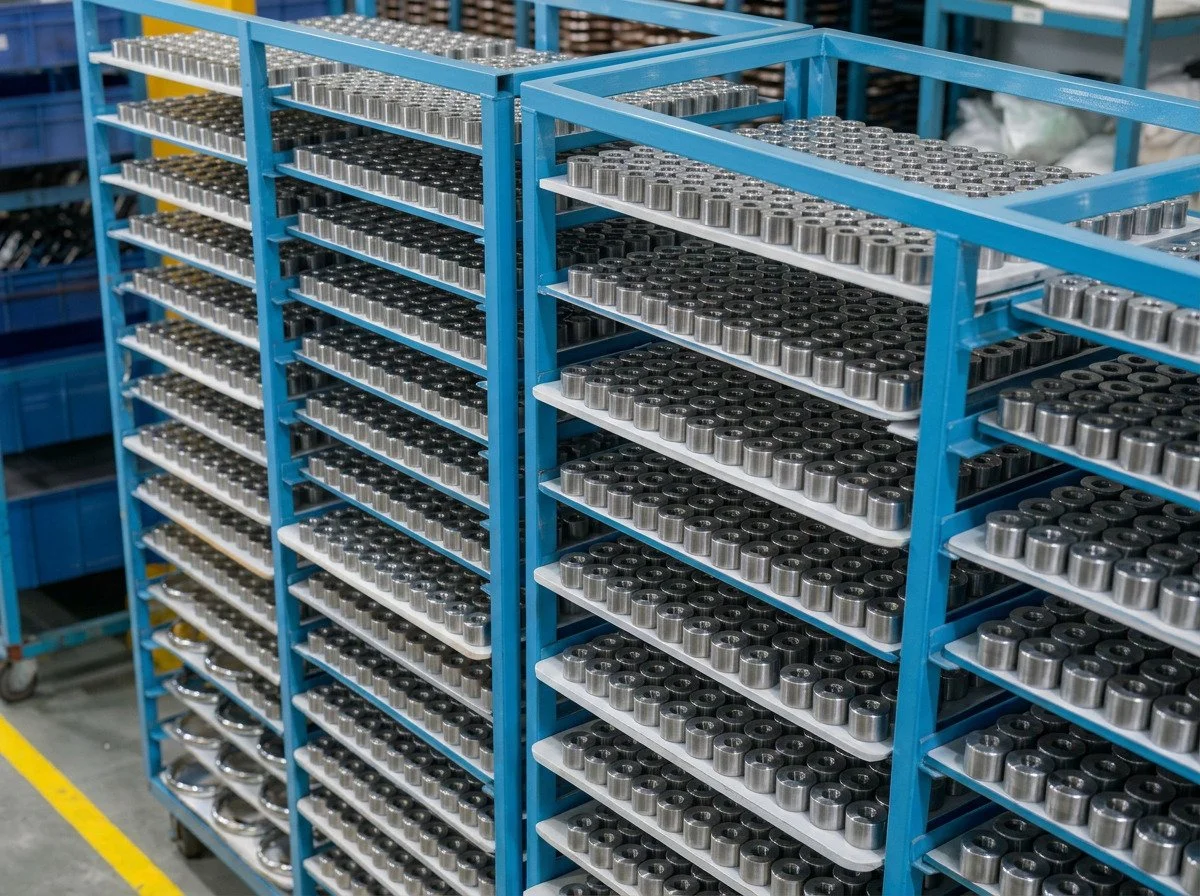
Surface Preparation
Clean and condition the plastic surface to support uniform plating and cosmetic consistency.

HOW WE WORK
2
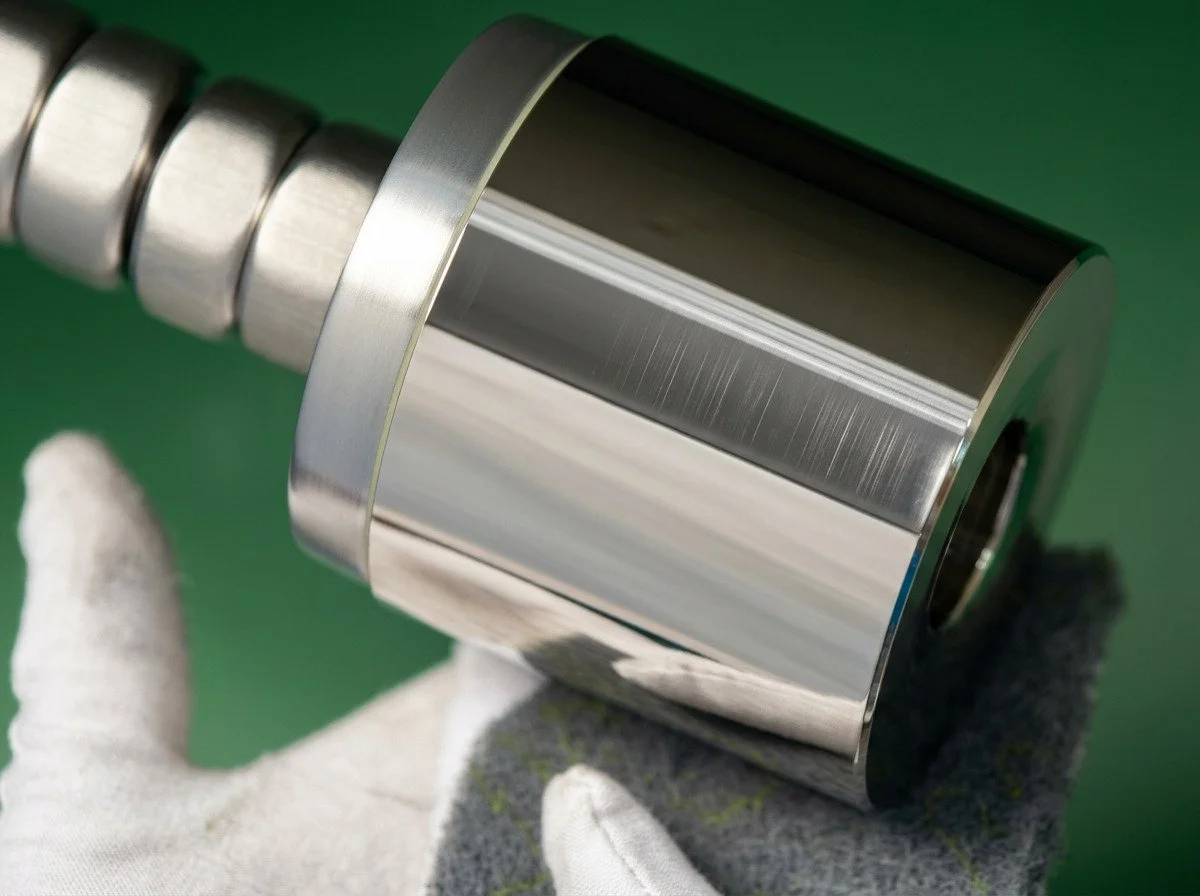
Nickel Plate + Brush Finish
Nickel plating to target tone/build, followed by controlled brushing for a consistent satin direction.
3
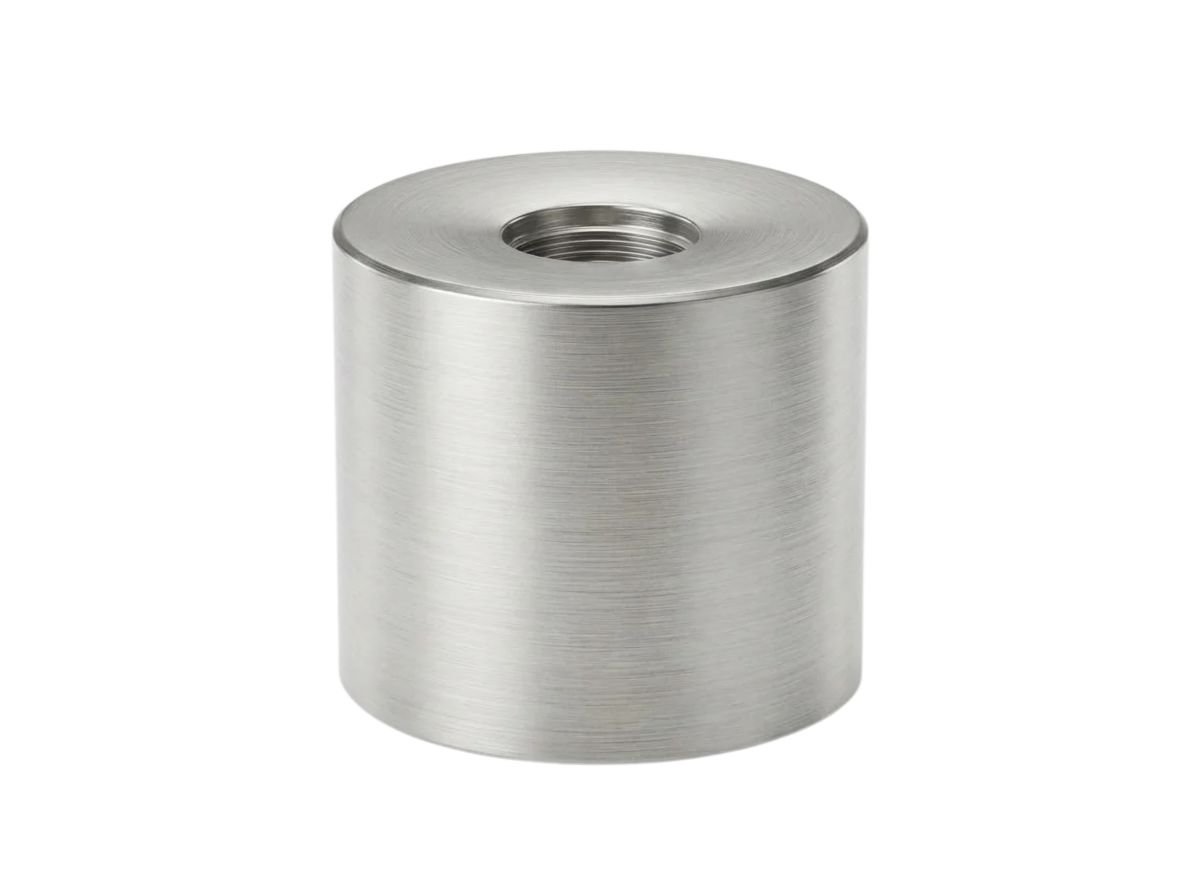
Inspection
Verify appearance and key requirements such as thickness, adhesion, and corrosion resistance as needed.


Ready to Start Your Brushed Nickel Project?
Share your part drawings, material, and finish target. We’ll recommend the process route and provide a fast quotation.

Premium Satin Appearance
Soft metallic sheen that feels modern and upscale without high glare.
ADVANTAGES
Why Brushed Nickel?
Consistent Texture Control
Directional brushing helps deliver repeatable satin finish across production.
Everyday Durability
With the right build and protection, surfaces resist visible wear from handling.

Versatile Design Fit
Works well across multiple product categories and complements many color palettes.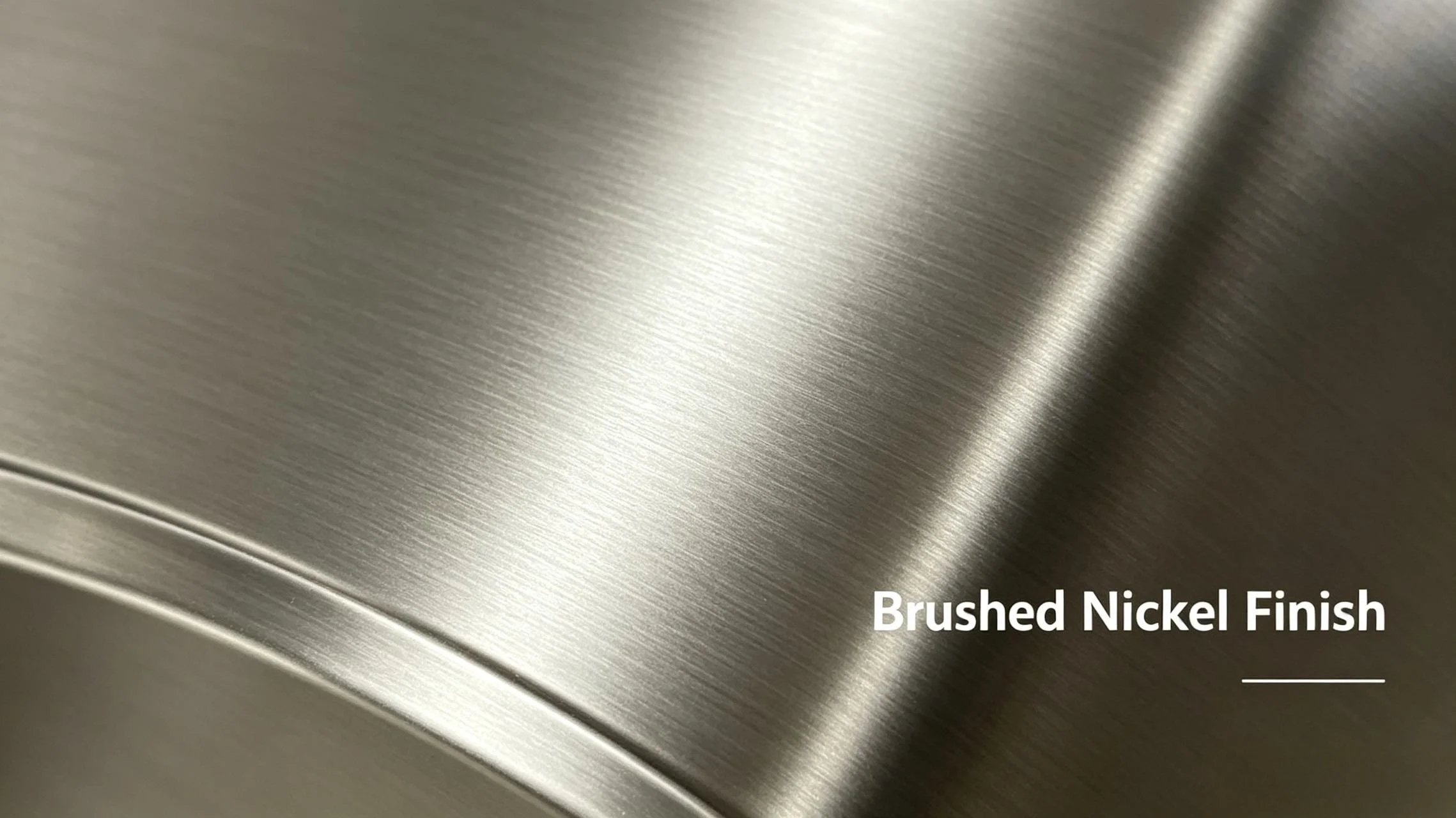
Industries We Serve
Brushed nickel finishing for decorative and functional components across major categories.

Cosmetic & Beauty Packaging
Caps, collars, closures, and decorative shells with a premium satin-metal look. Helps strengthen shelf appeal with consistent tone and texture.
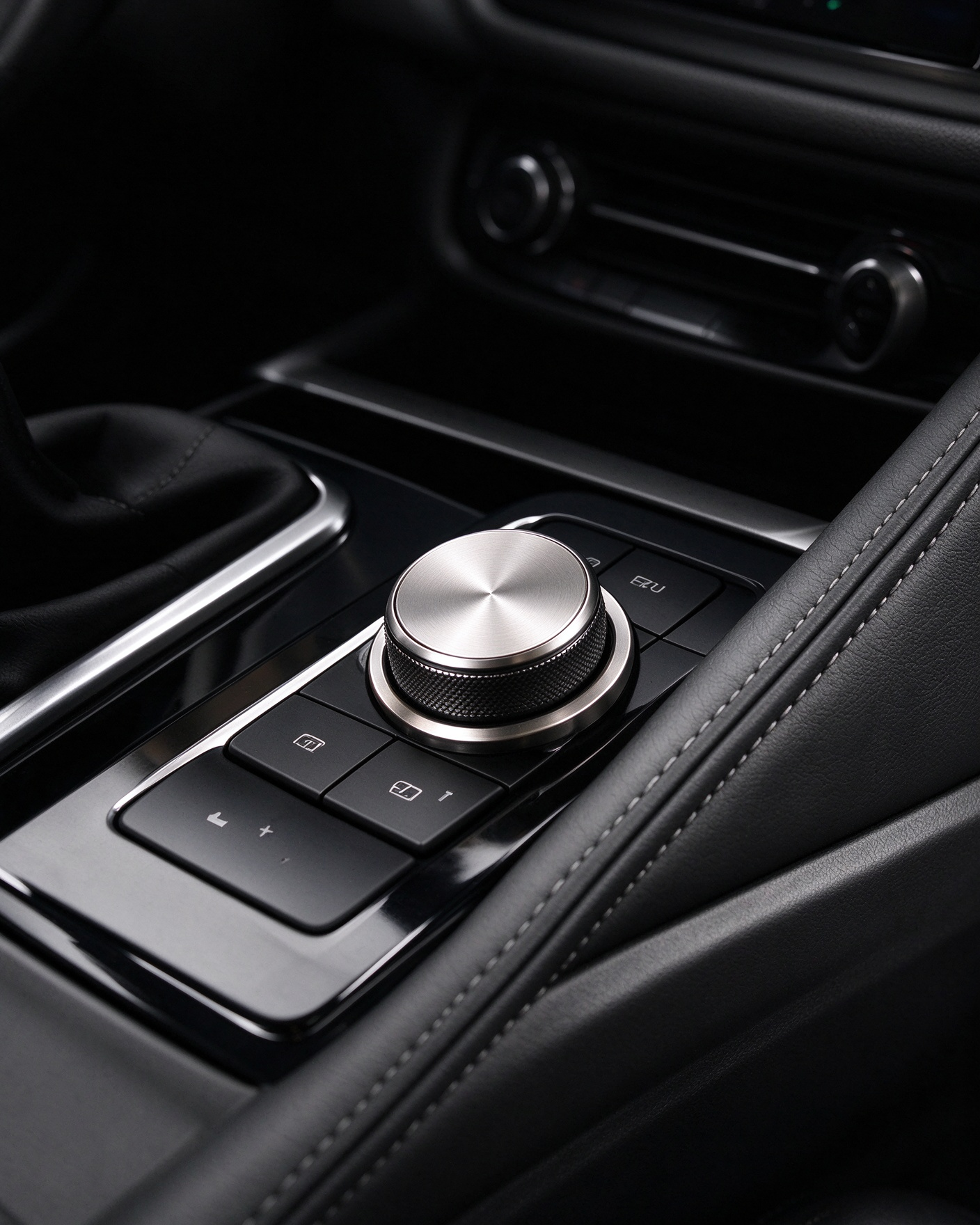
Automotive & Interior Trim
Appearance components requiring stable texture and uniform color. Suitable for high-visibility parts and frequent touch points.
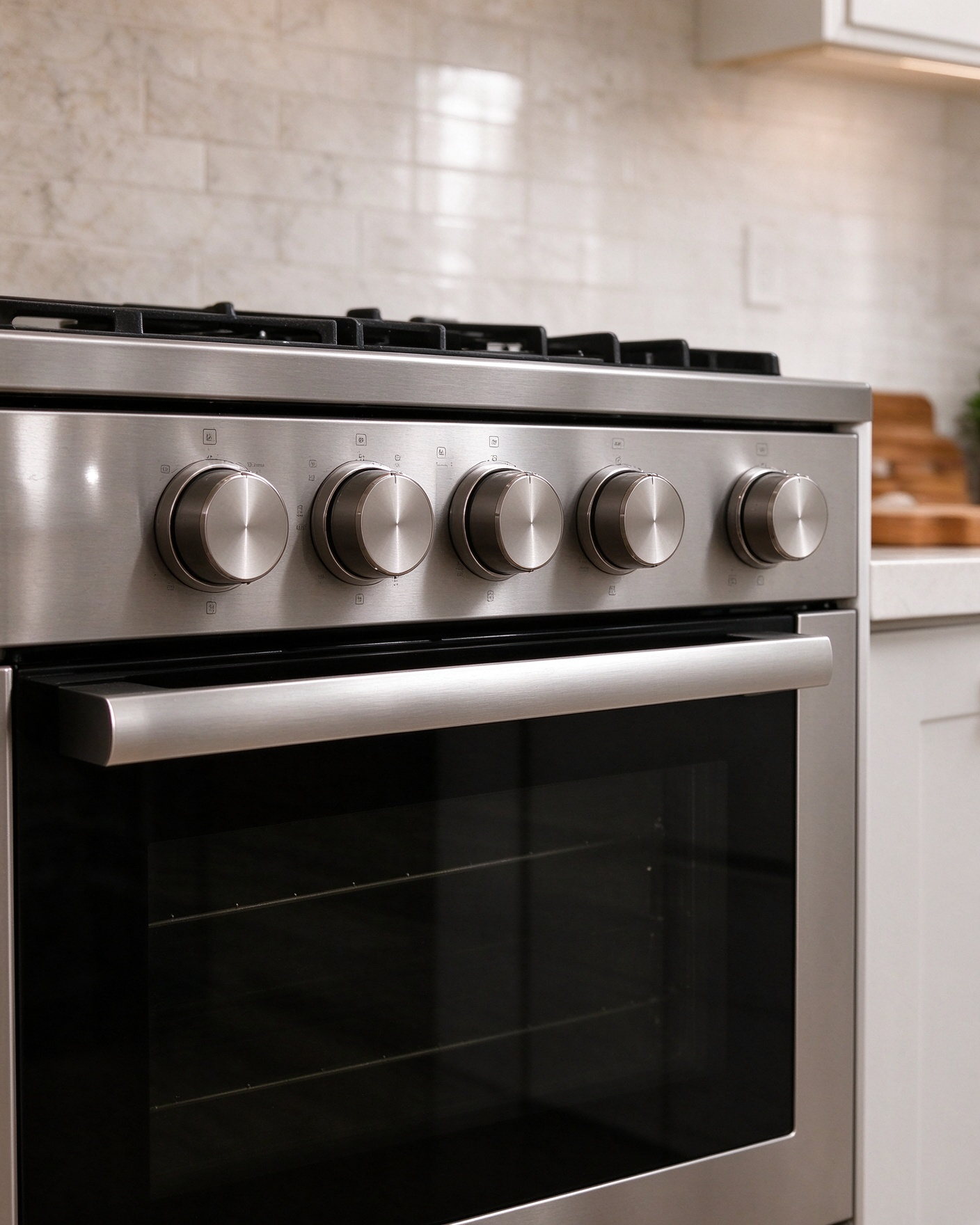
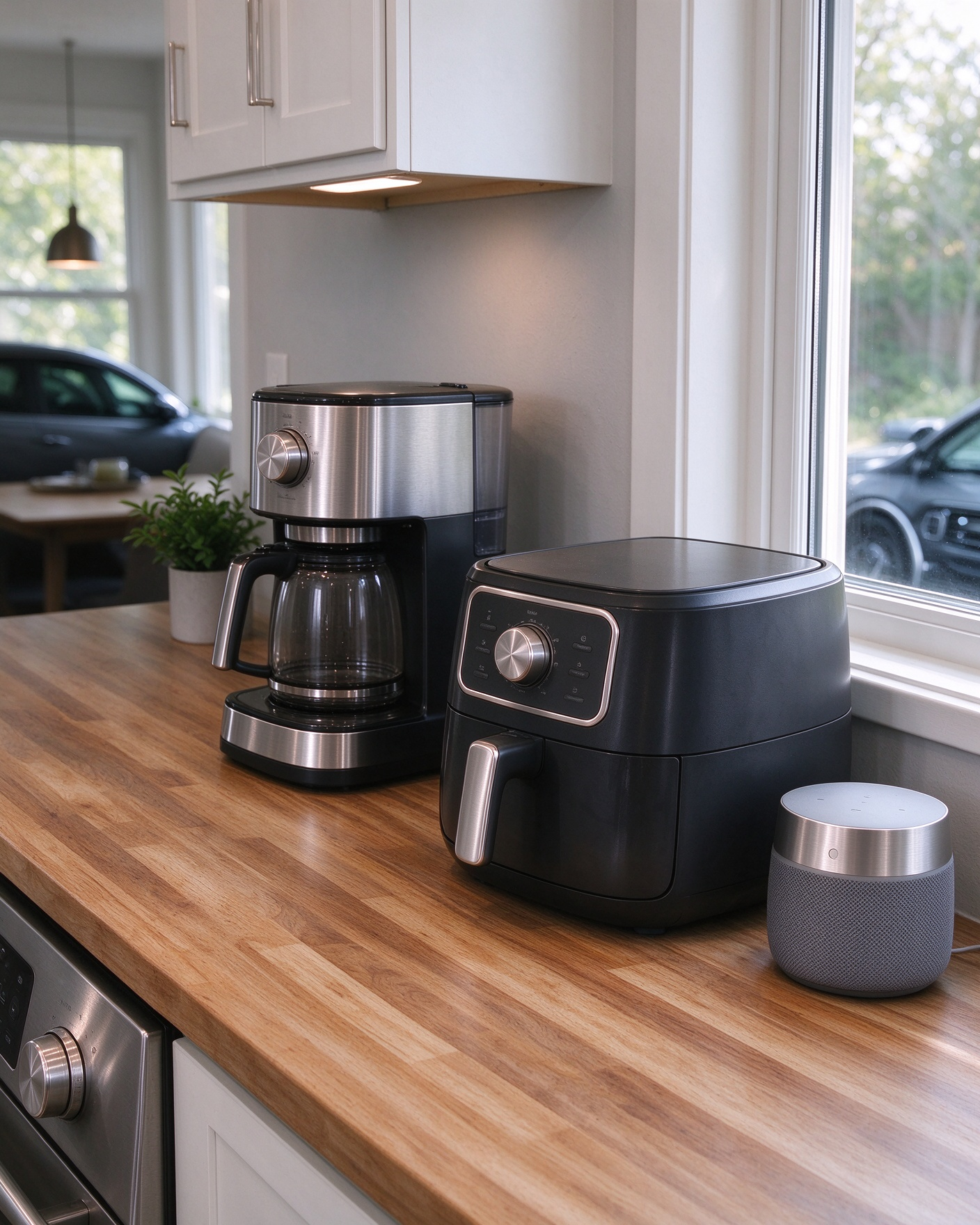
Kitchen Hardware & Appliances
Knobs, pulls, and appliance accents with a modern satin finish. Designed for daily handling and consistent appearance.
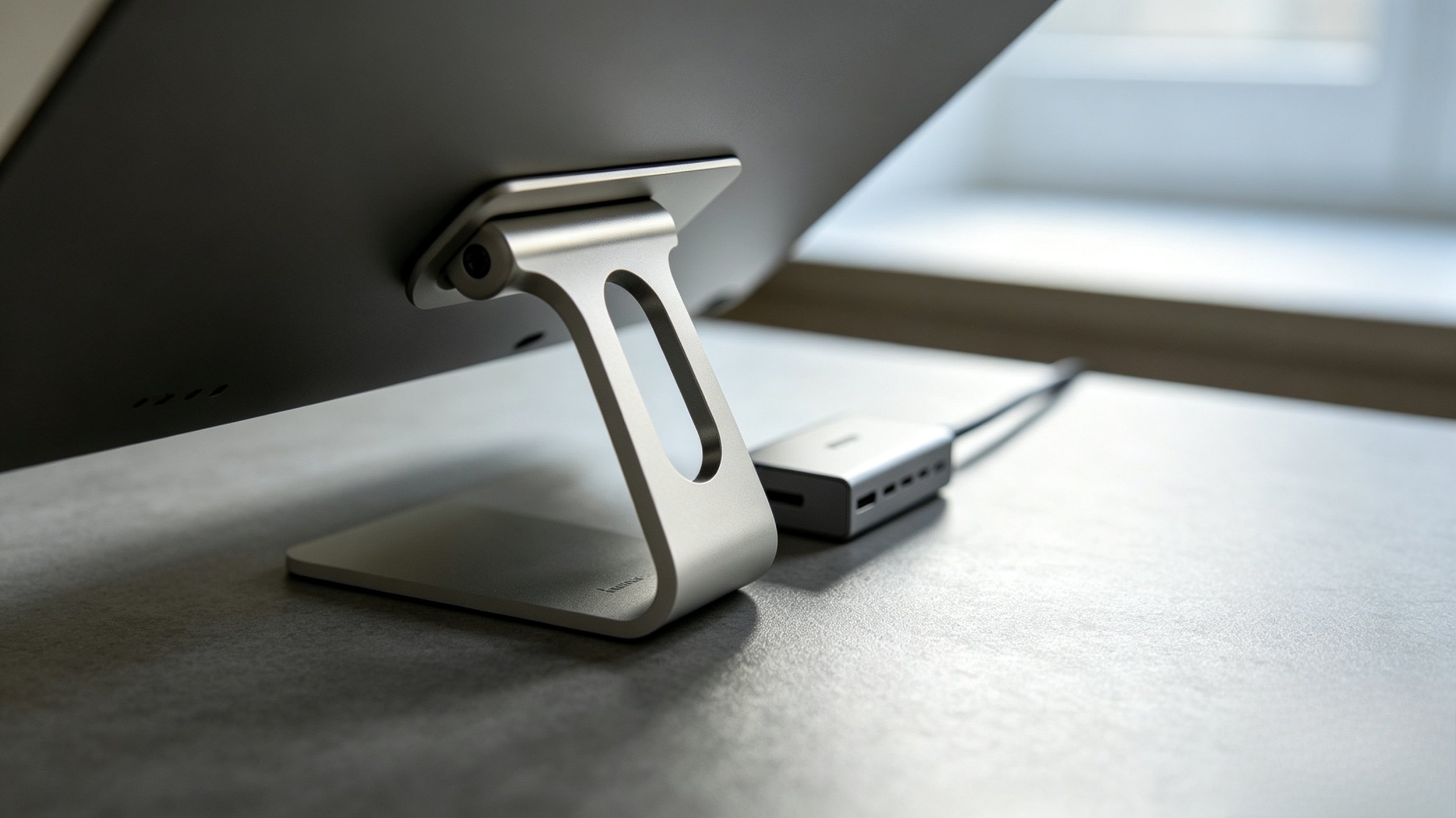
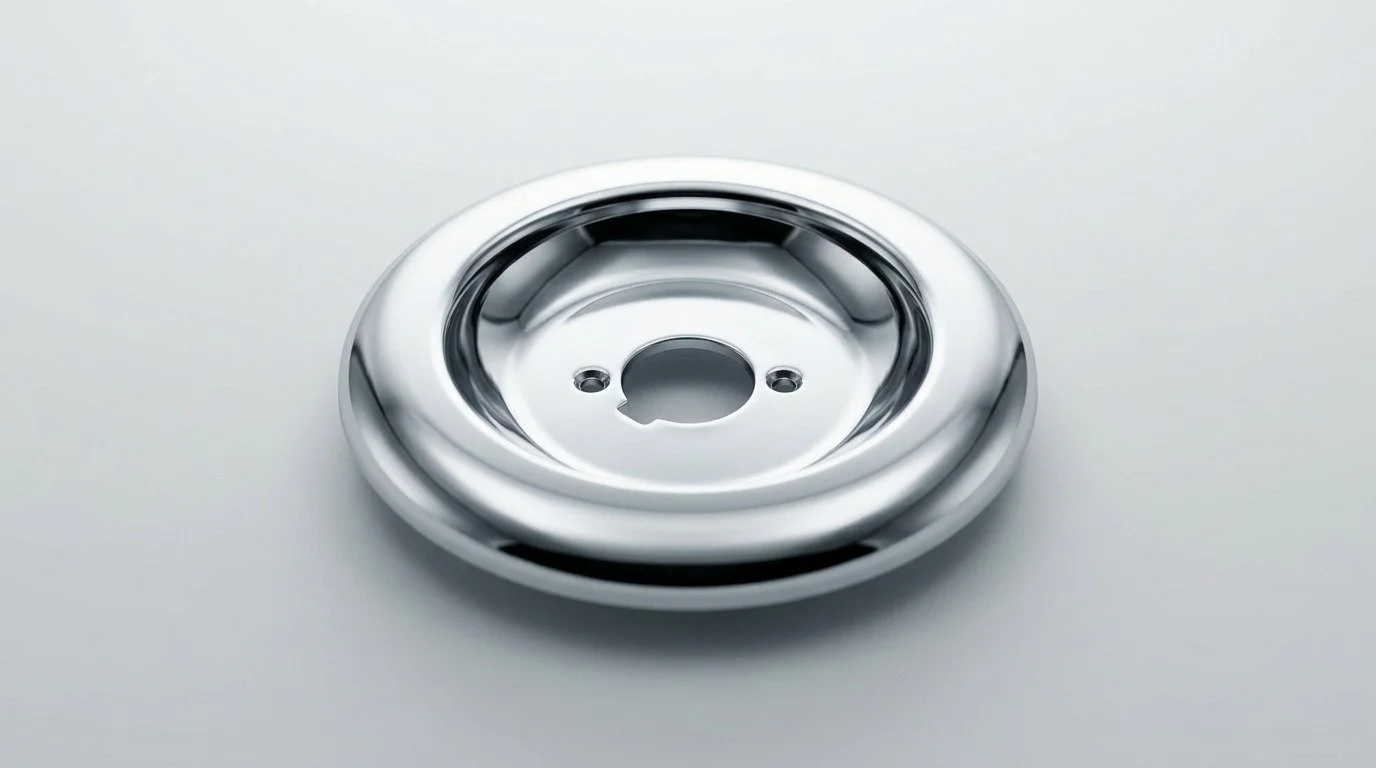
Bathroom & Sanitary Fixtures
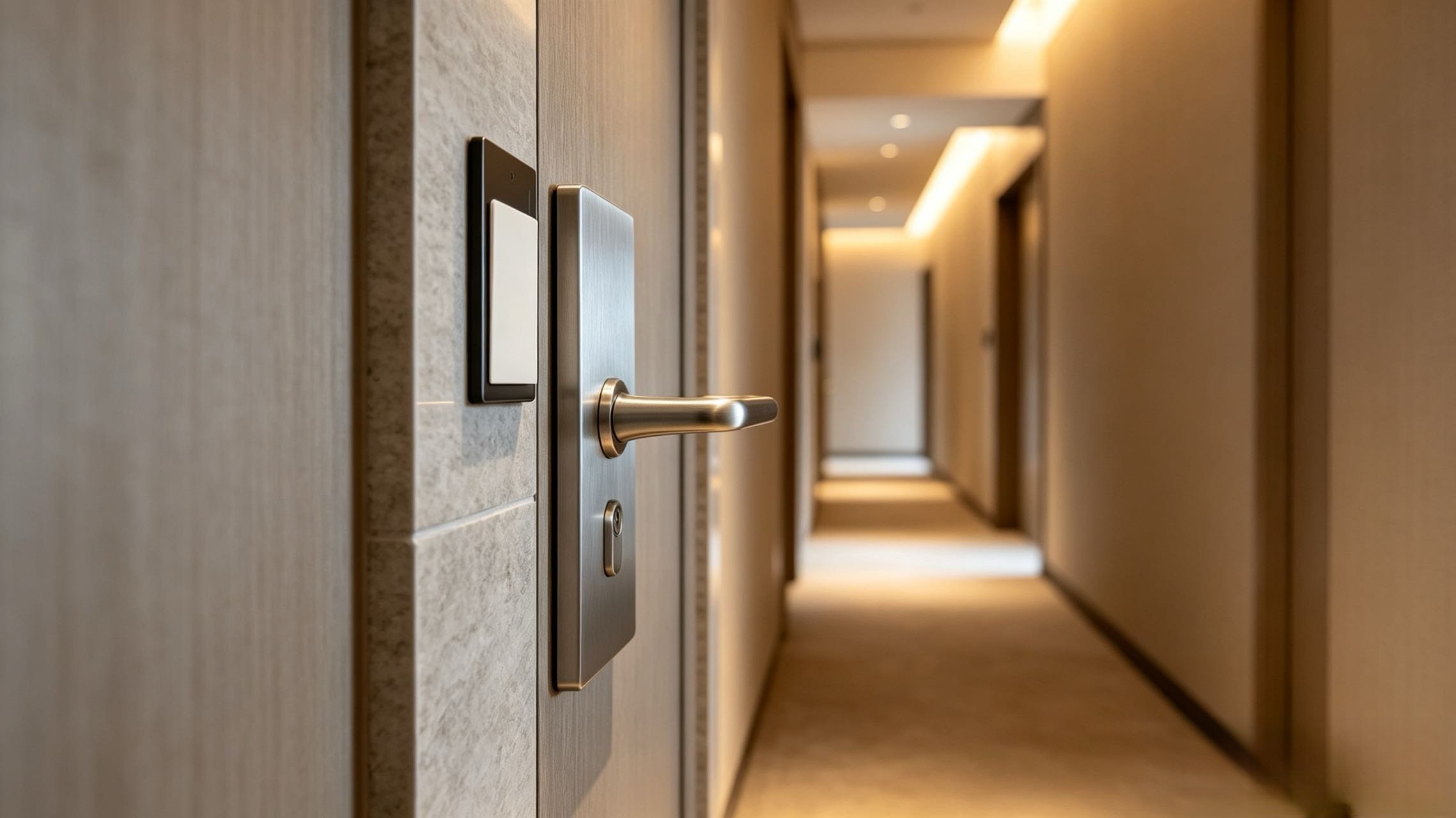
Door Handiles
APPLICATIONS
Automotive Interior Trim
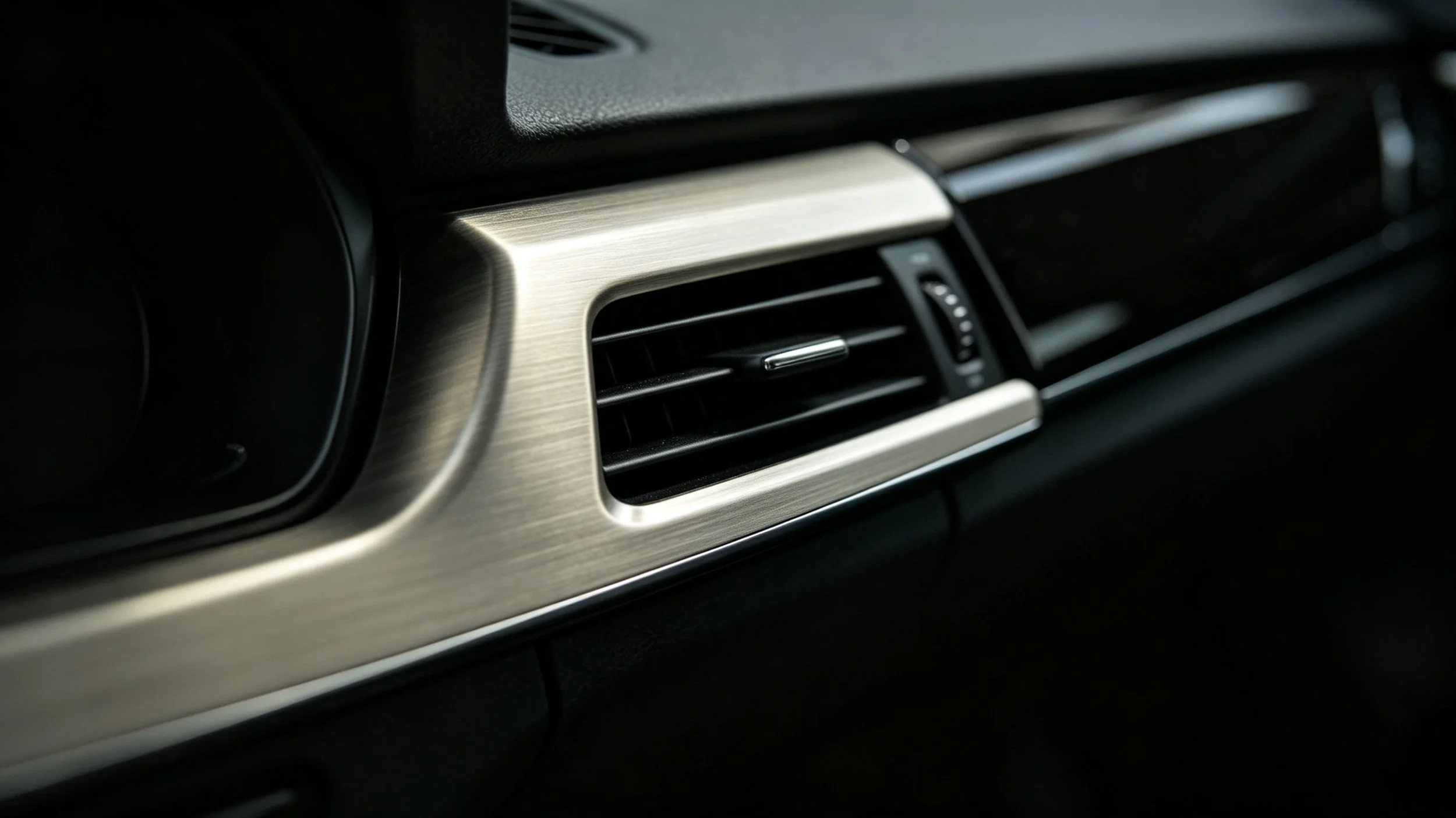
Bathroom Accessories
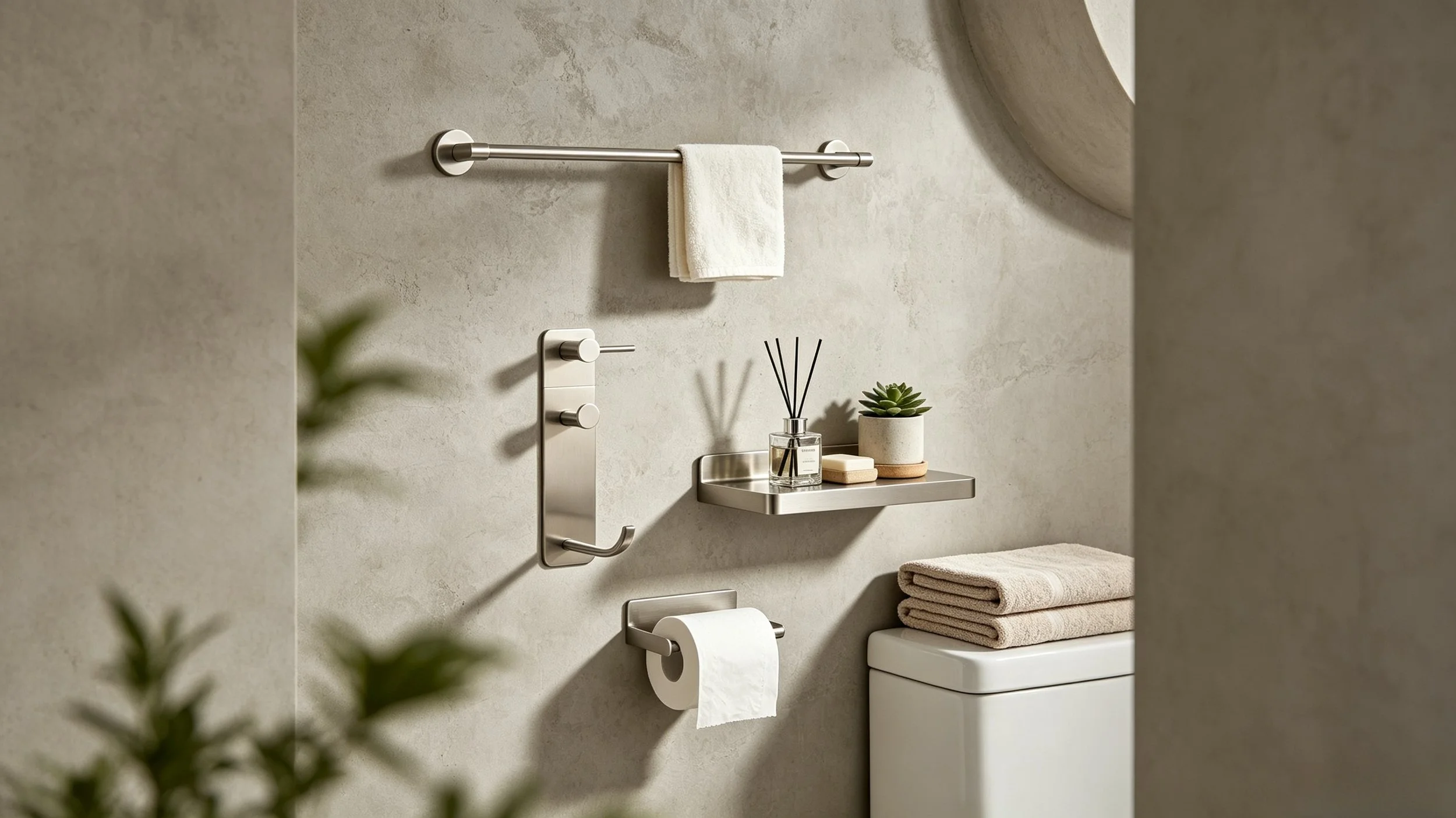
Audio Panels
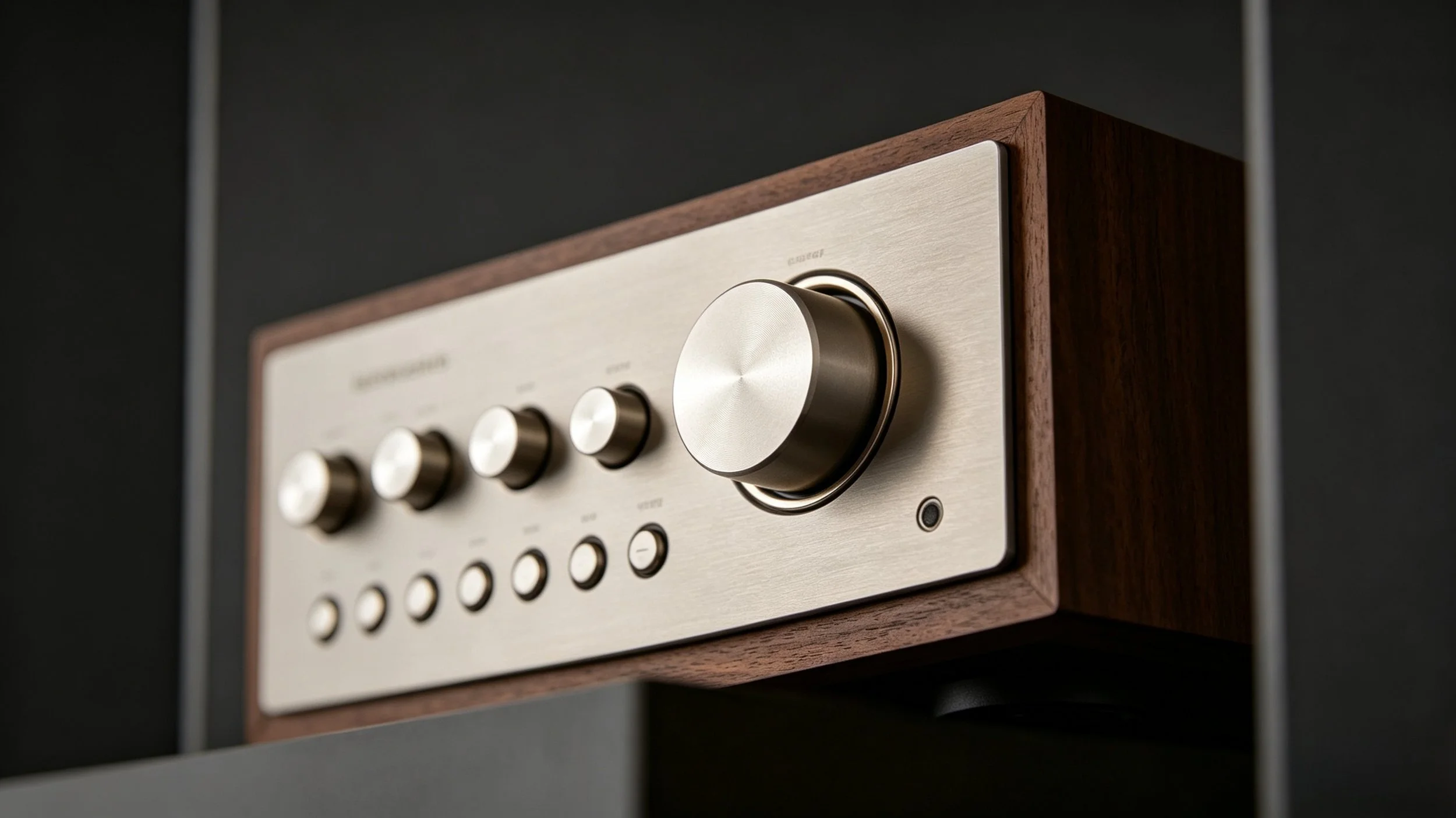
Kitchen Storage

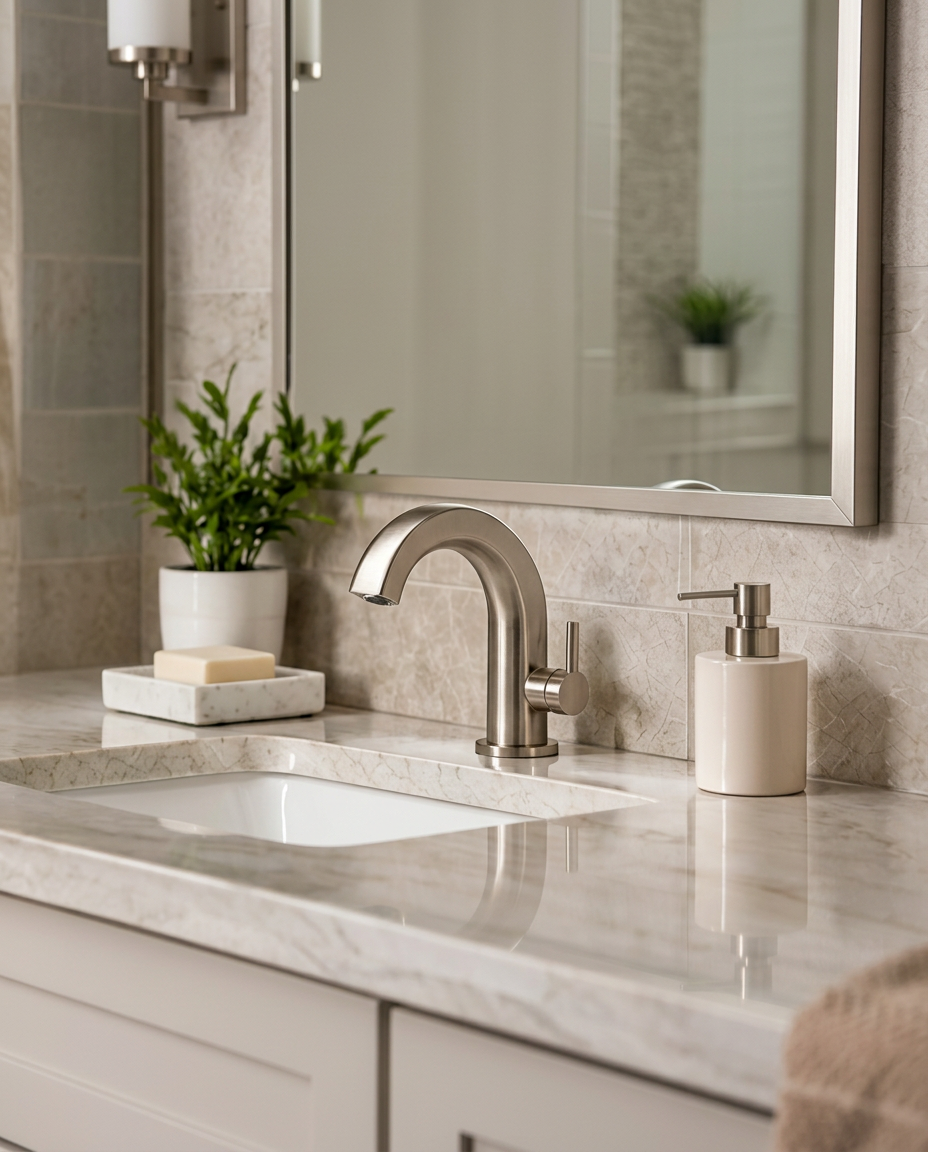
Bathroom & Sanitary Fixtures
Satin brushed nickel for trim parts and visible hardware. Built to maintain a clean look in humid, high-use environments.
Industrial Components & Hardware
Parts where surface performance and appearance both matter. Options can be tailored for wear, handling, and working conditions.

Consumer Electronics & Accessories
Decorative rings, covers, and housings where tone consistency matters. Complements premium product design with a refined metallic look.
Lastest Articles
Stay up to date with our latest insights, tips, and industry news. From product trends to behind-the-scenes stories, our articles are here to inspire and inform.


Frequently Asked Questions
-
Brushed nickel is a satin metallic finish with a fine, directional texture. It delivers a premium look with lower glare than mirror-bright chrome.
-
Yes—brushed nickel can be achieved on suitable plastic parts (commonly ABS) using plating and controlled surface texturing. Final results depend on part geometry, resin, and cosmetic requirements.
-
It can be either, but many projects use controlled brushing after plating to create a consistent directional satin look. We’ll recommend the best route based on your design and appearance target.
-
We manage consistency through process controls, reference standards (approved samples), and verification during production. For critical programs, we also align on lighting/visual inspection criteria to reduce variation.
-
Common verification includes coating thickness (XRF), adhesion checks, corrosion resistance testing (as specified), and surface hardness testing when required. Test scope is based on your spec and application.
-
Generally, yes—because the satin texture and lower reflectivity make fingerprints and light scuffs less noticeable. Actual performance depends on the exact finish build and any protective topcoat.
-
Part drawings (or samples), substrate/resin (e.g., ABS), dimensions, surface/appearance requirements, target quantity, and any test/spec needs. If you have an approved sample or color standard, that helps speed up matching.