
Every industrial designer knows the sinking feeling. The render was flawless. The prototype felt right. Then the first shot samples arrive: a seam slices across your hero surface, walls grew thicker overnight, a hidden snap became an exposed screw, and the fluid form you sculpted now looks like ordinary plastic.
The product works. But the design is gone.
Most blame the factory for “not getting the aesthetic.” The real culprit is earlier: the design was never translated into manufacturing decisions while it could still flex.
In water products—showerheads, filters, sprayers, housings—late-stage engineering doesn’t kill design through malice. It kills through patches. One “minor” fix at a time, each reasonable, each fatal.
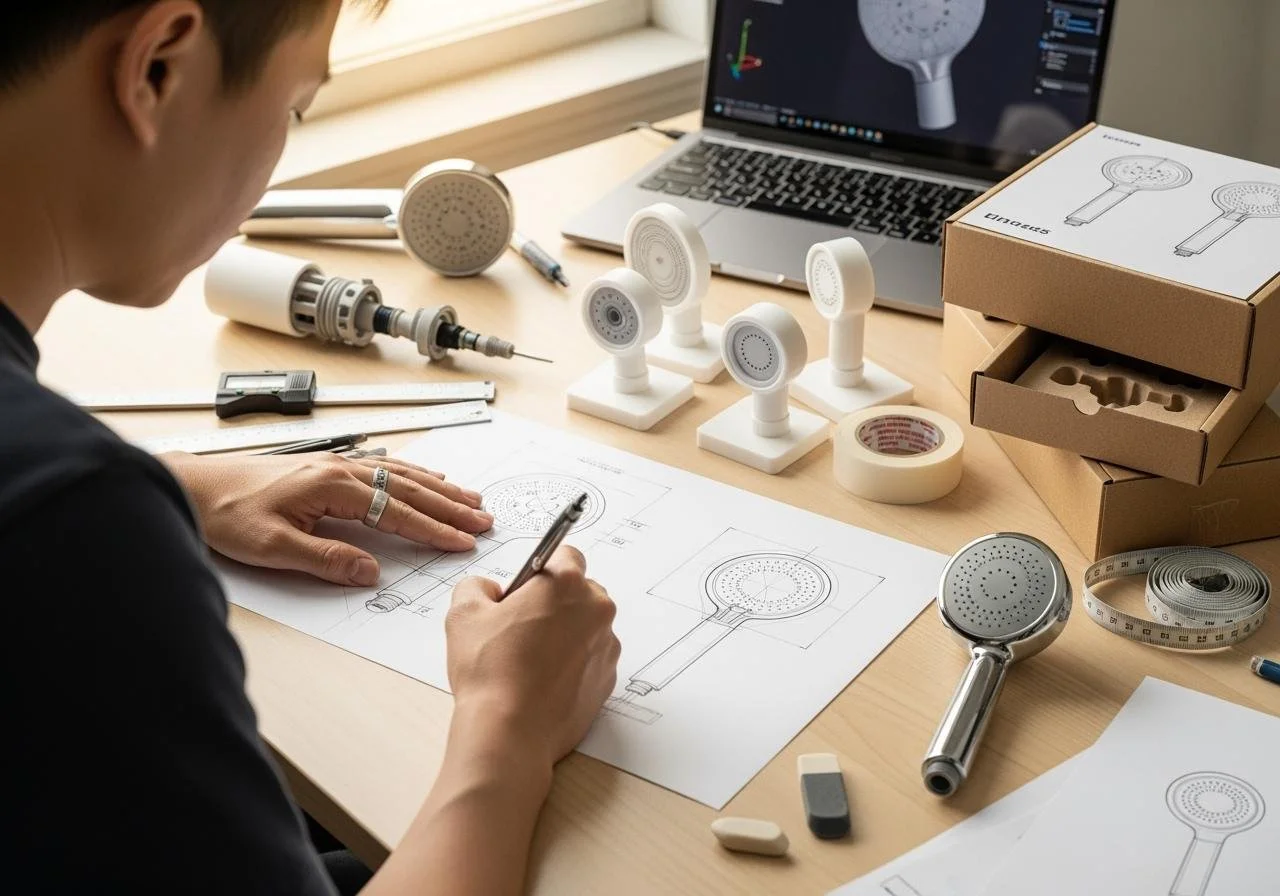
Six Manufacturing Considerations to Align On Early
The most effective way to preserve intent is to understand the production factors that will define the physical part before the design is fully set.
Parting Lines & Shut-offs
These determine where the mold opens and where visual breaks must live. Knowing the mold split during concepting lets you choreograph it into the form language rather than adjusting for it later.
Tolerances
Tolerances govern how mating parts meet. Defined early, they ensure seams read as intentional and crisp rather than variable.
Material Choice
Resin selection influences gloss, shrink, color stability, and scratch visibility. Choosing material with both aesthetics and water-contact requirements in mind prevents late-stage surface surprises.
Sealing Strategy
Waterproofing dictates wall thickness, compression zones, and thread geometry. Integrating sealing geometry during form development keeps profiles elegant.
Assembly Logic
How a product comes together determines what the user sees. Planning for ultrasonic welding, hidden clips, or discrete fasteners during concepting preserves a clean exterior.
Performance Reality
Flow rates, pressure drop, and noise can influence structural proportions. Bringing fluid dynamics into early discussions allows the form to evolve gracefully around engineering needs.
Why Intent Drifts
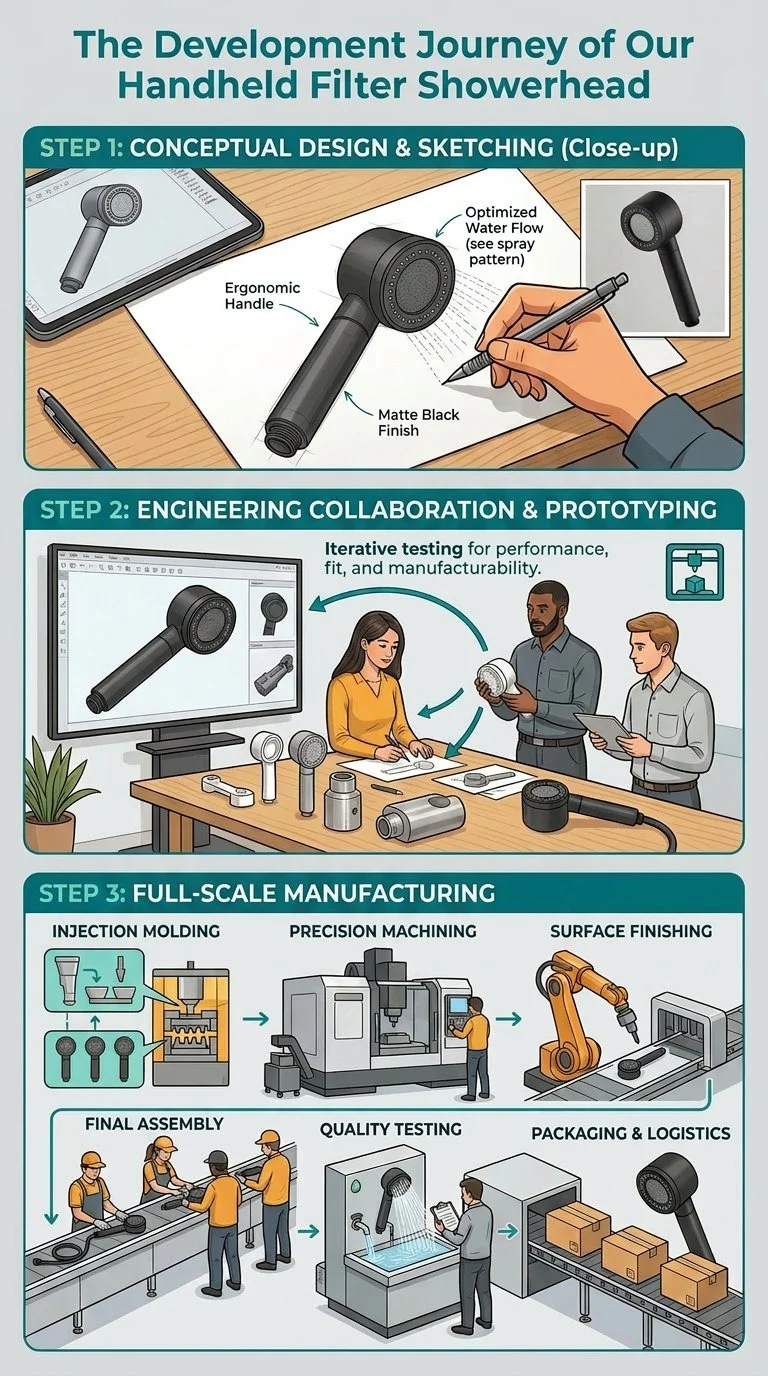
When design and engineering follow a strictly sequential workflow—concept first, engineering second—manufacturing constraints arrive after key decisions are already established. Engineers then work within fixed boundaries, making adjustments that naturally accumulate over time.
"Design intent cannot survive as a PDF. It travels best when manufacturing knowledge helps shape the design from the start."
Three Principles to Protect Your Vision
Translate early. Bring mold-flow, sealing, and fluid knowledge into the sketch phase. Constraints are creative fuel when they arrive on time.
Write intent as specification. Define A-surfaces, gap limits, and finish standards (gloss units, texture, color ΔE) before tooling. A picture is not a manufacturing brief.
Run a three-way conversation. Design, fluid performance, and mold engineering should negotiate simultaneously, not sequentially.
How AQUAmate Supports the Journey
We work alongside designers from the earliest stages, helping translate creative direction into manufacturable reality while the design is still flexible.
We provide early DFM feedback on parting-line strategy, material selection, and sealing architecture. We prototype to validate fit and feel before steel is cut. When engineering begins, we translate aesthetic goals into precise mold specifications—gate positions, tolerance stacks, and surface-finish controls—so the final part stays true to the original vision.
