
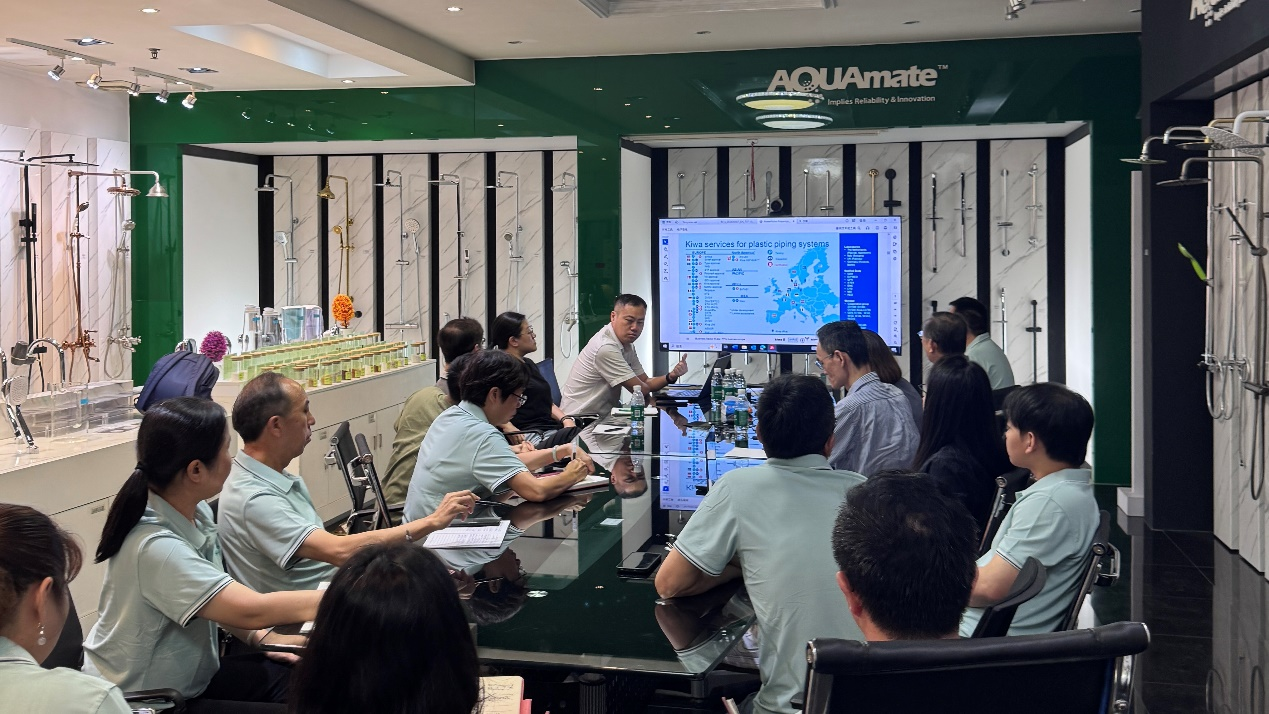
Kiwa experts explain to the AQUAmate team in our showroom
European drinking water safety regulations are entering a new chapter. AQUAmate believes the best way to understand evolving standards is to learn directly from those enforcing them. Therefore, we recently invited experts from Kiwa, one of the world's leading testing, inspection, and certification bodies for drinking water contact products, to our factory for an in-depth explanation of the EU Drinking Water Directive (EU-DWD).
For our clients who sell shower systems, filtration products, and bathroom accessories to the European market, this is more than just background information—this regulation will directly impact the materials and components permitted for sale in the EU from 2027 onwards. Below is what we learned and its significance for our OEM brands.
Quick Start: What is the EU Drinking Water Directive?
For readers unfamiliar with EU regulatory language, here is a brief explanation.
The EU Drinking Water Directive (EU-DWD, officially Directive (EU) 2020/2184) is the EU's revised framework for drinking water quality and safety. It replaces the old 1998 directive and takes a more proactive, risk-based approach to protecting public health—its scope extends from municipal water treatment to all products through which water flows, including pipes, valves, filters, faucets, hoses, and showerheads.
The most relevant part for manufacturers is Article 11, which harmonizes the sanitary requirements for materials that come into contact with drinking water across all EU member states. Previously, manufacturers might have needed to obtain separate national certifications from countries such as Germany (DVGW), France (ACS), and the Netherlands—each with its own testing system. The EU Medicines Directive (EU-DWD) aims to replace the existing fragmented system with a single "positive list" system: from 1 January 2027, only substances and materials listed on the EU's official positive list will be eligible for new product approval. Existing national approvals granted before the end of 2026 will be valid only within specific member states during the transition period (until 31 December 2032).
For customers selling products in the UK, it is important to note that the EU Medicines Directive will no longer apply to the UK after Brexit. The UK continues to use its own WRAS approval system, therefore, compliance with the Medicines and Healthcare products Directive (MHDR) and UK compliance are two independent but interconnected issues.
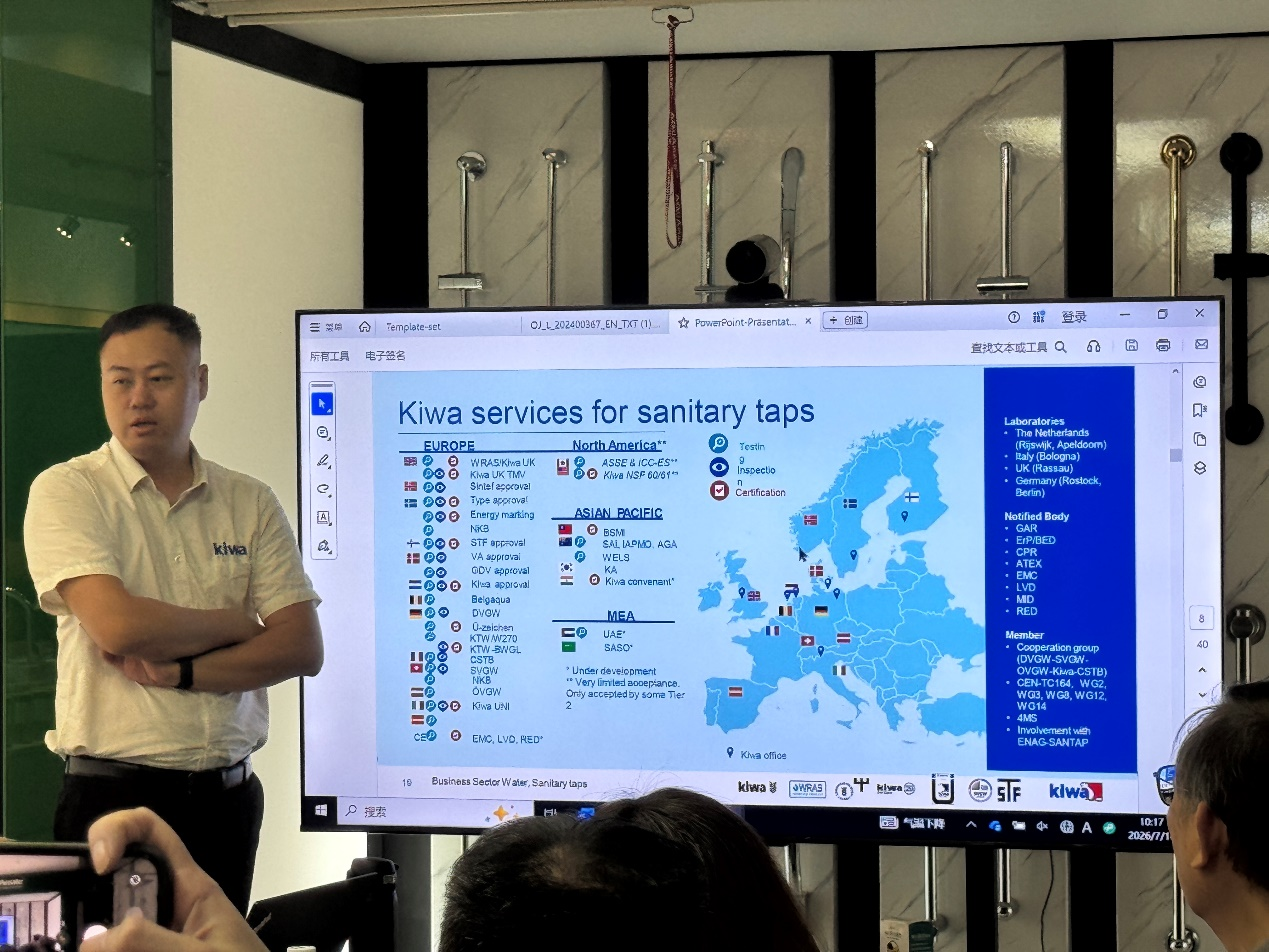
The following highlights are worth noting:
- Regional Certification Landscape: Kiwa details the differences in certification requirements across Europe (WRAS/Kiwa UK, DVGW, KTW-BWGL, CSTB, ÖVGW, Belgaqua, etc.), reminding us that the definition of "compliance" can vary depending on the country of export.
- Kiwa's Scope of Services: As a notified body, Kiwa's certifications cover areas such as the Building Products Regulation (CPR), ErP/BED, ATEX, EMC, LVD, MID, and RED, supported by laboratories located in the Netherlands, Italy, the UK, and Germany.
- Changes under DWD: Kiwa's testing procedures are aligning with EU-harmonized health assessment standards, and products already certified such as KTW-BWGL will lay a solid foundation for the new DWD certification pathway.
What does this mean for AQUAmate's customers?
For brands that work with us to develop showerheads, filters, and accessories, the EU Drinking Water Directive (EU-DWD) affects the materials closest to water: metal alloys in valve bodies and connectors, plastics used in filter housings and media housings, and seals and gaskets throughout the assembly. Products that use plastics and materials that meet EU Drinking Water Standards (KTW-BWGL) and similar standards typically have an initial advantage over those using conventional metal alloys not on the EU's approved list.
Workshops like these help us translate regulatory provisions into practical decisions early in the design process—including material selection, filter housing design, and documentation—rather than discovering compliance issues after the mold-cutting is complete. This is one way we support our customers in product design validation and in-house laboratory testing.
