
Choosing the Right Shower System for Your Project: A Buyer’s Guide
Most project teams have seen this happen: the bathroom looks great on paper, but once units start handing over, complaints roll in—temperature swings, weak spray, and worst of all, leaks that trigger rework.
The truth is, a shower system isn’t hard because it “needs to work,” but because it must work reliably, install smoothly, and stay low-maintenance at scale.
Many issues aren’t product defects—they come from early decisions that never aligned on the real constraints: water pressure, installation method, valve quality, finish durability, and serviceability. When those gaps show up on site, teams start “patching.” Each patch makes sense. Together, they become cost, delays, and bad reviews.

Six Manufacturing Considerations to Align On Early
(1)System Type: Exposed / Concealed / Thermostatic
This is your foundation decision.
Exposed: fastest install, easiest service—best for most volume projects
Concealed: cleaner look, but higher requirements for pre-install accuracy and later maintenance
Thermostatic: noticeably better comfort, but more sensitive to pressure and hot/cold supply stability
(2)Water Pressure & Spray Feel (Not Just “Bigger is Better”)
A large head doesn’t guarantee a great shower. Check:
performance under low pressure
spray uniformity
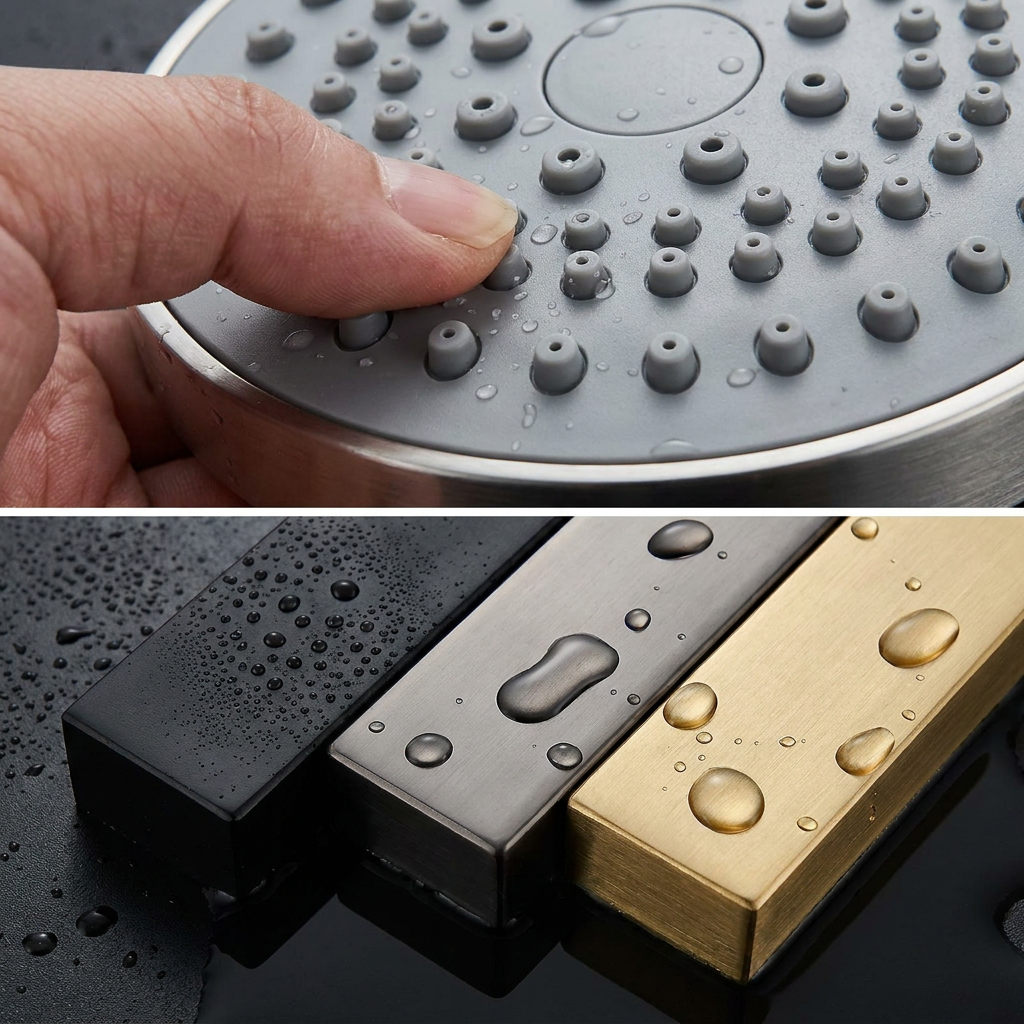
limescale resistance and ease of cleaning (critical in hard-water areas)
(3) Valve Body & Cartridge Reliability
The valve is the “heart” of the system. For projects, the risk is not a single failure—it’s small leaks and inconsistent performance across batches. Confirm:
lifecycle testing and consistency control
sealing design reliability
thermostatic stability and replaceability (if applicable)
(4) Sealing & Leak-Prevention Strategy (Especially In-Wall)
The most expensive leaks are the ones behind tile. Align early on:
sealing method at connections (O-rings/gaskets/geometry)
installation depth tolerance and anti-mistake features for concealed valves
clear installation and leak-check procedure
(5) Finish Durability (Looks Good—Stays Good)
Matte black, gunmetal, and gold sell—but projects need:
corrosion and cleaner resistance
controlled color consistency across batches
scratch and fingerprint performance
(6) Installation & Service Logic
This determines how many problems you’ll face later:
compatibility range (centers, adapters, interfaces)
can key parts be serviced without breaking the wall?
spare parts availability and ease of replacement
Why Projects Drift into Complaints
When the workflow is “pick the look and price first, solve details on site,” constraints show up late: pressure mismatch, rough-in deviations, valve instability, finishes that can’t handle cleaning chemicals. Teams then rely on constant adjustments—spacers, adapters, extra sealant, part swaps.
The system may pass today, but costs you tomorrow.
Three Principles to Protect Delivery & User Experience
Align constraints before choosing features: installation method, pressure range, and serviceability first.
Turn “looks/feel” into acceptance criteria: pressure range, finish requirements, color tolerance, lifecycle expectations.
Run a three-way conversation early: project team + installer + supplier—lock drawings, rough-in dimensions, and inspection points upfront.
How We Support Your Shower System Selection
We help translate “good-looking and comfortable” into solutions that are manufacturable, installable, and verifiable:
system selection support (exposed/concealed/thermostatic) and risk mapping
installation drawings, rough-in dimensions, compatibility range, and inspection checklist
pre-mass-production validation recommendations for sealing and durability
spare parts and service strategy planning to reduce lifetime cost
Next step: Share your project basics—quantity, budget range, system type, target finish/color, site water pressure (if available), and timeline. We’ll recommend a practical configuration path and key watch-outs.
